
Israel’s Far-Right Supporters Remain Hopeful of Retaining Political Influence

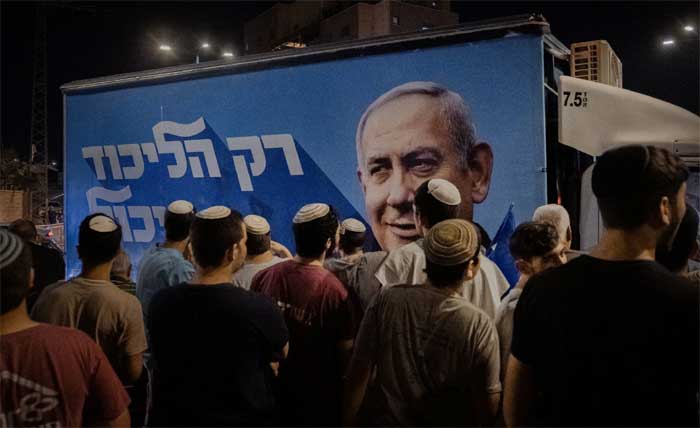
Israeli far-right politician Itamar Ben Gvir failed to achieve the electoral gains his party had hoped for in the latest election, but his political influence and support among parts of the electorate remain significant.
In the southern Israeli city of Sderot, near the Gaza border, some voters continue to view Ben Gvir as an essential figure in Prime Minister Benjamin Netanyahu’s political camp.
“Netanyahu needs Ben Gvir by his side, strong and stable, with right-wing views,” said Yaakov Peretz, a bakery employee who spoke to AFP.
Ahead of the October 27 election, Ben Gvir’s Jewish Power party and Bezalel Smotrich’s Religious Zionism had hoped to expand their influence after years of Israel’s political landscape shifting to the right.
However, the two parties secured a combined 13 seats, the same number they held previously. While the result fell short of their ambitions, it confirmed their continued presence in Israeli politics.
Ben Gvir, who has a history of extremist rhetoric and was convicted in his youth on charges including incitement to racism, served as national security minister in Netanyahu’s outgoing government. Alongside Finance Minister Smotrich, he represented the coalition’s most hardline faction.
His political positions have included calls for the so-called voluntary emigration of Palestinians from Gaza and the West Bank, more aggressive military operations in Gaza, and severe restrictions on conditions for Palestinian prisoners.
Before the election, Ben Gvir had openly expressed ambitions to become defence minister.
Despite the far right’s continued electoral support, its prospects of retaining the same level of government influence appear uncertain as political parties negotiate to form a new coalition.
Netanyahu’s bloc, which includes Ben Gvir and Smotrich, won 53 seats in the October 27 vote, falling short of the 61 required for a parliamentary majority.
The opposition camp, led by former army chief Gadi Eisenkot, secured 48 seats. Its prospects could improve if it reaches an agreement with Arab-Israeli parties, which collectively won 19 seats — a development strongly opposed by the far right.
Electoral support versus political influence
Yael Shomer, a political science professor at Tel Aviv University, said the election exposed a contradiction in the far right’s position: its electoral support had increased, but its influence in the next government could decline.
According to her calculations, the far-right parties received approximately 100,000 more votes than they did in 2022. However, voter turnout was also the highest since 1999.
Shomer described the outcome as a disappointment for the parties and their supporters, despite the increase in votes.
In Sderot, Ben Gvir’s hardline security positions have found support among residents deeply affected by the October 7, 2023 Hamas attack, which killed 53 people in the city.
Peretz said he lost a relative, a firefighter, who was killed on the road during the attack.
The experience, he said, reinforced his belief that Israel needed radical political positions to defend its territory and population.
He expressed concern about the possibility of a new government excluding Ben Gvir and Smotrich, even if Netanyahu and Eisenkot eventually agreed to form a national unity coalition.
Concerns over Arab parties’ role
Other residents also voiced opposition to the possibility of Arab-Israeli parties joining an opposition-led government.
Susan Buskila, 67, a Likud voter, said her children supported Ben Gvir and Smotrich. She wants both politicians to remain in government, describing them as representatives of religious and Zionist youth.
She also expressed concern that an alliance between Eisenkot and Arab parties could lead to changes in Israel’s military policy in Gaza and renewed rocket attacks against Sderot.
Shahar Yaakov, a 43-year-old shopkeeper who voted for Ben Gvir, said he was extremely disappointed with the election outcome.
He described the possibility of Arab parties participating in a future government as the worst political scenario, although he said he would prefer a national unity government that excluded the far right over an arrangement involving Arab parties.
Calling for political reconciliation within Israel, Yaakov said the country needed unity before pursuing peace with the Palestinians or other Arab countries.
The election has therefore highlighted a continuing divide in Israeli politics: while the far right has maintained a committed voter base, its ability to translate that support into positions of power will depend on the negotiations over the next governing coalition.
Comments are closed, but trackbacks and pingbacks are open.