
Delhi-NCR Air Quality Deteriorates as AQI Enters ‘Very Poor’ Category in Delhi and Noida

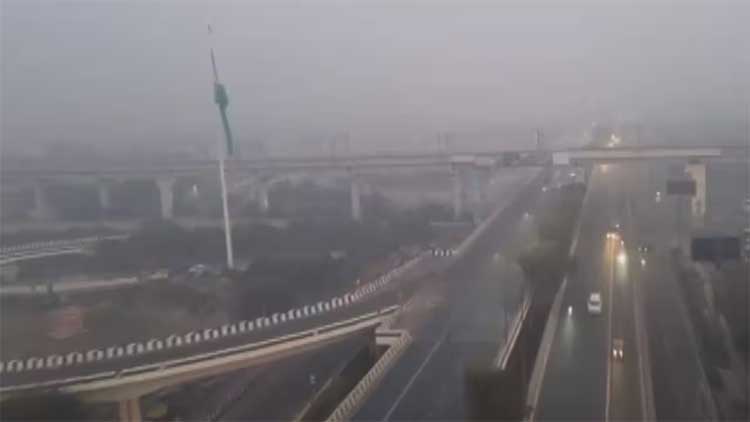
Air pollution levels across Delhi and the National Capital Region (NCR) worsened on Monday, with the Air Quality Index (AQI) in Delhi and Noida entering the ‘very poor’ category, raising concerns over public health.
Visuals from parts of central Delhi showed the city covered in a thick blanket of smog. According to the Central Pollution Control Board’s (CPCB) Sameer app, Delhi recorded an AQI of 310 at 8:05 am on November 2, up from 277 a day earlier.
Neighbouring Noida also reported ‘very poor’ air quality, with an AQI of 311, marginally higher than Delhi.
Meanwhile, Ghaziabad and Gurugram remained in the ‘poor’ category, recording AQI levels of 278 and 230, respectively. Faridabad recorded relatively better air quality, with an AQI of 116, placing it in the ‘moderate’ category.
Noida Records Highest AQI in NCR
Among the five cities, Noida reported the highest pollution level at 311, followed by Delhi at 310.
The CPCB app’s health advisory warned that prolonged exposure to ‘very poor’ air quality could cause respiratory illnesses.
Ghaziabad’s AQI stood at 278, while Gurugram recorded 230. Prolonged exposure to air in the ‘poor’ category can cause breathing discomfort among most people.
Faridabad’s AQI of 116 was classified as ‘moderate’. However, the advisory cautioned that people with lung disorders, asthma and heart conditions could experience breathing difficulties.
Rainfall Had Briefly Improved Air Quality
The deterioration comes just days after rainfall brought significant relief to Delhi-NCR.
Delhi recorded its cleanest October air in four years, with the AQI falling to 60 on October 30. The monthly average AQI stood at 167, the lowest October average since 2015.
The capital also recorded an October maximum temperature of 20.7°C, its lowest since 1951.
Noida witnessed a similar improvement following rainfall on October 30, when its AQI dropped to 58. However, pollution levels subsequently increased, rising to 106 on October 31 and 248 on November 1.
The Sameer app reported that six of Noida’s seven air-quality monitoring stations were operational.
Delhi Tightens Vehicle Restrictions Under GRAP
The worsening air quality comes despite stricter vehicle-entry restrictions introduced in Delhi under the revised Graded Response Action Plan (GRAP) from November 1.
Under the restrictions, petrol and diesel vehicles registered outside Delhi that do not comply with BS-VI emission standards are prohibited from entering the capital until January 31, 2027. Electric and CNG vehicles are exempt.
Restrictions also apply to non-BS-VI commercial goods vehicles and buses that fail to meet the prescribed emission standards.
Authorities have intensified inspections at Delhi-NCR entry points, deploying Automatic Number Plate Recognition (ANPR) cameras and Radio Frequency Identification (RFID) systems to identify vehicles violating the restrictions.
Despite the measures and recent rainfall, pollution levels have risen sharply across several NCR cities, with Delhi and Noida once again recording air quality in the ‘very poor’ category.
Comments are closed, but trackbacks and pingbacks are open.