
Jamia Millia Islamia Agrees to Hold Students’ Union Elections After Constitution Approval, but Protest Continues

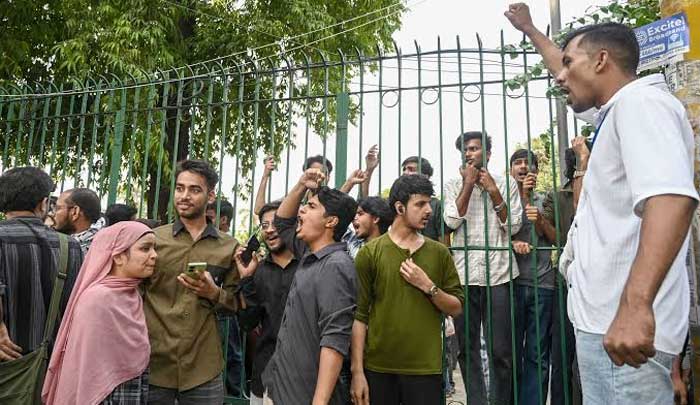
Jamia Millia Islamia (JMI) on Monday agreed to hold students’ union elections within 15 days of the approval of the union’s constitution, following negotiations with protesting students. However, the university’s failure to specify a deadline for approving the constitution has left the dispute unresolved, with hunger strikers indicating that their protest may continue.
The decision followed a meeting between university officials and protesting students on Sunday night, after nearly two weeks of demonstrations demanding the restoration of the Jamia Millia Islamia Students’ Union, which has remained dissolved since 2006.
An order issued by the registrar’s office stated: “The Jamia Millia Islamia Student’s Union Election will be held after 15 days, from the date of approval of the constitution of the student’s union of Jamia Millia Islamia.”
However, the order did not establish a fixed timeline for drafting and approving the constitution, which remains the central demand of the protesters.
University Promises to Revoke Notices, Probe Security Staff
In addition to agreeing to hold elections, the university administration assured students that suspension and show-cause notices issued during the protest would be revoked.
The order also provides for the formation of a committee to investigate the conduct of university security personnel during the demonstrations.
These commitments followed a written submission titled Demand of Hunger Strike Students, presented by the hunger strikers and their representatives. The students had insisted on receiving a formal written assurance from the administration before ending their demonstration.
“We will call off the hunger strike and sit-in protest only upon receiving a written agreement from the university administration accepting them,” the letter stated.
The protesters’ demands included a clear schedule for restoring the students’ union, withdrawal of disciplinary action against participating students and an official inquiry into the conduct of security staff.
Administration Sets Conditions for Ending Protest
The university’s order also outlined conditions for the protesting students.
According to the document, students were required to undertake to issue a public apology at a press conference for any “defamatory statements/actions/posts” made against the administration during the protest. They were also directed to remove the relevant social media posts immediately, with compliance to be monitored by the university.
The order further directed the students to call off their protest immediately after its issuance.
Although the students had stated in their letter that they would end the demonstration upon receiving a written agreement addressing their demands, questions remain over whether the administration’s response meets all their requirements.
Hunger Strikers Question Absence of a Fixed Deadline
Despite the university’s written assurances, the hunger strikers indicated that the protest would continue because the order did not specify when the union’s constitution would be drafted and approved.
They also raised concerns about students facing more severe disciplinary measures, including campus bans and rustication, arguing that the administration’s assurances addressed suspension and show-cause notices but did not explicitly resolve their cases.
“Also, the order mentions the suspension and showcause notices, but what about students who have been barred from the campus and rusticated? Hunger strikers have also been banned from the campus and rusticated,” Ebin, who had been on hunger strike for 15 days, told The Indian Express.
The students’ response highlights the gap between the administration’s commitment to holding elections and their demand for a time-bound process to restore the union, along with relief from all disciplinary measures imposed during the agitation.
A Long-Standing Demand for Student Representation
The dispute centres on the restoration of the Jamia Millia Islamia Students’ Union, which has remained dissolved since 2006. The latest agitation has brought renewed attention to students’ demands for elected representation and greater accountability in university administration.
While the university’s order marks a step towards addressing the demand for elections, the absence of a deadline for approving the union constitution remains a key point of contention.
Whether the protest ends will depend on further engagement between the administration and the students, particularly over the election schedule and the status of those facing campus bans or rustication.
Comments are closed, but trackbacks and pingbacks are open.