
Black Sea Drone Strikes on Cargo Ships Heighten Fears of Escalation Near NATO Borders

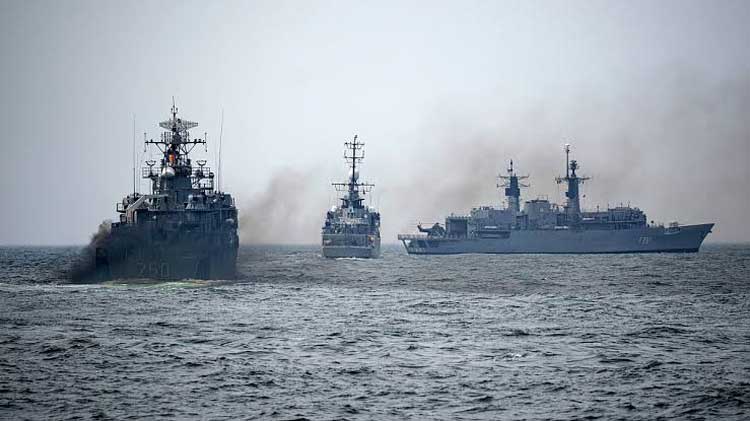
A series of drone attacks on at least seven cargo vessels in the Black Sea this month has raised concerns among NATO members Romania and Bulgaria that Russia could be escalating tensions to test the alliance’s support for Ukraine.
The attacks in the two countries’ exclusive economic zones have threatened a key global shipping route, left two people dead and at least 25 missing, and heightened fears that other countries could be drawn more directly into the war.
Russia has repeatedly targeted Ukraine’s Black Sea and Danube river ports since launching its full-scale invasion, forcing Kyiv to rely increasingly on alternative routes to export grain to markets in Africa and the Middle East. Russian drones have also repeatedly violated Romanian airspace near Ukraine’s Danube ports.
The latest incidents saw fires break out aboard two drone-hit vessels on Wednesday and Thursday, including one in Romanian territorial waters.
Romanian President Nicusor Dan said in Brussels on Thursday that two drones had struck the vessels but did not identify their origin. He warned that “there will be a reaction from the Romanian state”.
Suspicion has increasingly focused on Russia. Bulgarian Prime Minister Rumen Radev told his country’s Parliament that the attacks appeared to benefit Moscow, arguing that Ukraine had little reason to target its own vessels and crews. However, he acknowledged that responsibility could not be proven.
Multiple Cargo Ships Hit in October
Among the latest incidents, the San Marino-flagged chemical tanker Wine Trader, travelling from Tunisia to Romania, was struck by a drone on Thursday and caught fire. Five crew members were rescued, while seven remained missing.
On Wednesday, the Comoros-flagged tanker Yara J, travelling from Turkiye to Romania, was hit by a drone and caught fire. Romania’s acting Defence Minister Radu Miruta said an investigation was underway.
Two more vessels were struck off Bulgaria’s coast on Tuesday. All 15 crew members aboard the Ukraine-operated, Malta-flagged Chelsea 3 were evacuated after its deck and hull were reportedly hit by three aerial drones. However, 11 crew members aboard the Guinea-Bissau-flagged HS Dignity remained missing.
Earlier in October, attacks in Bulgaria’s exclusive economic zone reportedly sank a Togo-flagged vessel carrying 12 sailors, while a Bulgarian ferry evacuated 18 crew members from a damaged Palau-flagged ship.
A Turkish-owned cargo ship carrying corn also caught fire after a drone attack before sinking off Romania’s coast. Two people died, while 11 crew members were rescued. Ukrainian President Volodymyr Zelensky described the incident as a Russian drone strike on a civilian vessel in neutral waters.
Russia’s ambassador to Bulgaria said she had no information from the Russian Defence Ministry about the incidents.
NATO’s Article 5 Comes Under Scrutiny
NATO Secretary-General Mark Rutte said on Thursday that he had met Radev and Dan to discuss Black Sea security and the latest attacks on commercial shipping.
“NATO has strengthened our posture along the eastern flank including with increasing counter-drone capabilities,” Rutte said in a post on X, adding that the alliance would adjust its deterrence and defence posture as needed.
However, questions remain over whether NATO’s Article 5 collective-defence guarantee would apply to incidents occurring in the exclusive economic zones of member states.
Romanian defence analyst Radu Tudor said the legal implications remained uncertain, raising questions about how the alliance should respond to repeated attacks near its borders. He argued that NATO needed to move beyond statements as drone incidents continued.
Drone Threats Continue Near NATO Territory
The October attacks are the latest in a series of drone incursions affecting Romania and other NATO members since Russia’s full-scale invasion of Ukraine. While most incidents have involved Russian drones, Ukrainian drones have also crossed borders.
In August, Romania deployed two F-16 fighter jets to destroy a naval drone reportedly carrying explosives near a major Black Sea gas project. Miruta said the decision was intended to protect hundreds of people working on the gas platform.
A Romanian defence-sector source told The Associated Press that the attacks appeared aimed at damaging Ukraine’s economy rather than targeting Romania directly. However, the source warned that the repeated discovery of drone debris and maritime drones along Romanian shores was becoming increasingly concerning.
Calls for a Black Sea Shipping Escort Corridor
The Romanian source said Turkiye might seek to bring together Black Sea coastal states to discuss escorting commercial convoys through a protected maritime corridor.
However, the proposal faces significant challenges. Romanian naval vessels lack the air-defence systems needed to reliably protect ships against drone attacks, the source said, warning that military escorts could themselves face considerable risks.
In July, Romania, Bulgaria and Turkiye expanded their Black Sea Mine Countermeasures Task Force agreement to include the protection of critical underwater infrastructure, with plans for a permanent naval presence in Romania’s exclusive economic zone.
Bulgaria’s Defence Minister Dimitar Stoyanov also said the country planned to join NATO’s Drone Edge project by the end of October. Launched in July, the initiative aims to invest more than $40 billion in counter-drone capabilities over five years. Romania has also joined the project.
Rising Insurance Costs Add to Shipping Concerns
Despite the attacks, the incidents have not yet negatively affected trade at Romania’s Black Sea port of Constanta, according to Cezar Gheorghe, founder of grain consultancy firm Agricolumn.
The greater concern is the potential increase in insurance premiums for vessels operating across the wider Black Sea, he told the AP.
Higher risk premiums could raise shipping costs for vessels travelling through the Bosphorus Strait and onward to Constanta, affecting the economics of regional trade.
Gheorghe also warned of the danger of a serious incident occurring at or near the port. A Ukrainian maritime drone exploded at Constanta in June, with three others detonating nearby.
As drone attacks continue to threaten commercial shipping, NATO members face growing pressure to strengthen maritime security while avoiding steps that could widen the conflict.
Comments are closed, but trackbacks and pingbacks are open.