
30 Seconds Of Terror, 14,300-Foot Plunge, ‘Blood Everywhere’: Indian Captain Battles Co-Pilot On Flydubai Flight

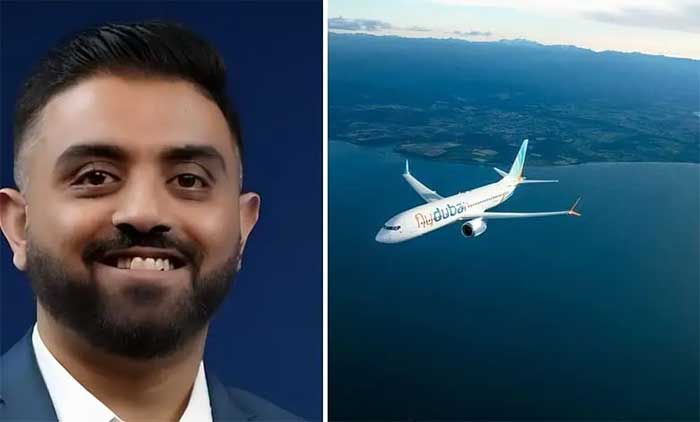
The co-pilot of a flydubai flight from Dubai to Tel Aviv allegedly stabbed the captain on Wednesday, triggering a struggle in the cockpit that sent the Boeing 737 MAX 8 into a rapid 14,300-foot descent over northern Saudi Arabia.
The aircraft issued a hijack alert and diverted to Tabuk, where it landed safely. Israeli Prime Minister Benjamin Netanyahu praised the wounded Indian captain, saying he fought back and helped open the cockpit door, allowing passengers and crew to overpower the attacker.
The captain, Smit Machchhar, is from Ghatkopar East in Mumbai and was based in Dubai, people familiar with the matter told Hindustan Times. Both pilots were hospitalised, according to Tabuk Airport. Machchhar underwent surgery and was reported to be stable, while the other pilot was arrested by Saudi authorities.
Netanyahu Praises Captain’s ‘Extraordinary Bravery’
Netanyahu praised Machchhar in a post on X, saying the captain continued to resist despite being seriously injured and enabled passengers and crew to subdue the attacker.
Netanyahu said Machchhar’s actions prevented what could have been a major mid-air disaster and saved the lives of 174 people, including Israeli citizens and passengers of other nationalities.
In a separate video message, Netanyahu said the attacker intended to crash the aircraft. However, it was not immediately clear whether that was established fact or Netanyahu’s assessment of the incident.
Israeli officials told Reuters that the alleged attacker was an Omani national.
Indian Captain Smit Machchhar Undergoes Surgery
BJP legislator Parag Shah, who represents Ghatkopar East, said he had spoken with Machchhar’s family and confirmed that the captain was safe and receiving medical treatment.
Machchhar’s parents have travelled to Dubai, Shah said, adding that the government was assisting the family.
A family friend said Machchhar grew up in Ghatkopar and studied in Mumbai. He joined flydubai’s Boeing 737 fleet as a direct-entry captain in June 2022 after spending 11 years with SpiceJet in Mumbai.
According to his LinkedIn profile, he had served as a senior commander and later trained and assessed other pilots. His profile listed around 9,750 flying hours and a business administration degree from the Welingkar Institute of Management. His brother is also a pilot with Akasa Air, according to people familiar with the family.
What Happened On Flydubai Flight FZ1073?
A passenger identified as Miriam Abukasis told her mother, Yasmin, that she heard screaming and saw a man with a knife force one of the pilots to the floor, with blood visible in the cockpit area.
A video reportedly recorded by another passenger and circulated by Israeli media showed a passenger describing one pilot as seriously injured and the other as suffering lighter injuries.
Flydubai said all passengers were safe. Israeli media reported that around 150 Israelis were aboard the aircraft.
Flight data analysed by Hindustan Times from Flightradar24 and ADS-B Exchange showed that FZ1073 departed Dubai at 7:05am local time and climbed to around 34,000 feet while flying west over Saudi Arabia.
At approximately 8:21am Saudi time (10:51am IST), more than two hours into the flight and around 235 km northeast of Tabuk, the aircraft began a dramatic descent.
Between two recorded readings 37 seconds apart, its altitude fell from 33,225 feet to 18,925 feet, equivalent to a descent rate of roughly 23,000 feet per minute.
The aircraft eventually reached around 16,600 feet, with its recorded ground speed peaking at 598 knots (1,107 km/h). It subsequently climbed more than 5,000 feet before descending again and eventually stabilising at around 15,000 feet.
Hijack Alert Triggered During Emergency
Flight-tracking data showed the aircraft’s transponder displaying 7700, the standard emergency code, at around 8:31am after a nine-minute loss of tracking.
At approximately 8:35am, the transponder changed to 7500, the internationally recognised hijack code. It was not immediately known who activated the codes.
The aircraft initially continued northwest towards Jordan before turning back and returning over Saudi territory. It eventually diverted to Tabuk and landed safely.
Reports that the aircraft approached the speed of sound were based on ground speed, as publicly available tracking data did not provide its precise airspeed during the descent.
Photographs said to show the aircraft after landing appeared to indicate damage to its rudder. Hindustan Times noted that it could not independently verify the authenticity of the images.
Similar Incidents Involving Cockpit Attacks
The incident has drawn comparisons with previous cases involving attacks inside aircraft cockpits.
In EgyptAir Flight 990, which crashed into the Atlantic in October 1999, US investigators concluded that a relief first officer deliberately placed the Boeing 767 into a dive. The aircraft descended from around 33,000 feet to 16,000 feet in roughly 36 seconds before crashing, killing all 217 people aboard. Egypt disputed the US finding.
Another incident occurred three months earlier when a hijacker aboard an All Nippon Airways Boeing 747 stabbed the captain and caused the aircraft to descend to a very low altitude near Tokyo before crew members and an off-duty pilot subdued him and regained control.
Israeli Officials Initially Ruled Out Hijacking
Doron Spielman, a spokesperson for Netanyahu, initially ruled out a hijacking before later saying that assessment had changed, Bloomberg reported.
Netanyahu held security consultations following the incident and cancelled his scheduled engagements for the day, according to an Israeli official cited by Reuters.
The Israeli government said measures were being taken to facilitate the return of Israeli passengers, while Israel’s transport ministry said Emirati authorities were working on arrangements for their return.
Israel’s far-right National Security Minister Itamar Ben-Gvir also commented on the incident on X.
Flydubai Says Flight Diverted To Tabuk
Flydubai, a sister airline of Emirates, has so far said only that the flight experienced an incident and was diverted to Tabuk.
The airline has operated flights between Dubai and Tel Aviv since late 2020 and, according to its website, runs around 70 flights a week on the route.
The incident comes against the backdrop of Israel’s security concerns and its lack of diplomatic relations with Saudi Arabia, while Israel and the UAE have developed close security and economic ties since establishing relations in 2020.
Comments are closed, but trackbacks and pingbacks are open.