
2 MHA Officials Arrested For Allegedly Seeking Bribe To Facilitate FCRA Registration

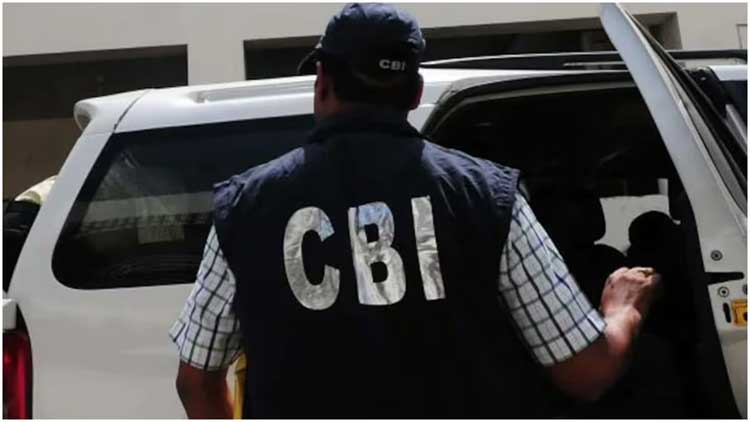
The Delhi Police Special Cell has arrested two government officials, including one posted in the Home Ministry’s Foreigners Division, for allegedly seeking illegal gratification from an association in exchange for facilitating its pending registration under the Foreign Contribution (Regulation) Act (FCRA), the government said on Tuesday.
The two officials were arrested on Monday following a tip-off from the Union Ministry of Home Affairs (MHA). Police are also investigating whether they were involved in facilitating similar FCRA registrations or renewals in the past.
According to an MHA spokesperson, one of the accused officials is working as a senior accountant and the other as an accountant. One is currently posted in the MHA’s Foreigners Division, while the other is posted in a Pay and Accounts Office and had previously served in the Foreigners Division.
“The officials … had allegedly approached an association and sought illegal gratification to facilitate its pending FCRA registration,” the spokesperson said.
“Preliminary questioning indicates that the two officials were in contact with certain associations to facilitate their registration and renewal in exchange for illegal gratification,” the spokesperson added.
What Is FCRA?
The Foreign Contribution (Regulation) Act governs the receipt and use of foreign contributions by Indian individuals, associations, NGOs, trusts and other entities. The law lays down conditions for receiving foreign contributions and specifies how such funds must be received, accounted for and reported. The FCRA is administered by the Ministry of Home Affairs.
The MHA reiterated that all FCRA-related services are provided online through the official FCRA portal.
“No intermediary, agent or individual is authorised to facilitate any such service,” the ministry said.
FCRA Law And Proposed Amendments
India enacted the first FCRA in 1976 to regulate the acceptance and utilisation of foreign contributions. The FCRA, 2010 subsequently replaced the earlier law as cross-border financial flows and international engagement expanded. The framework was later amended in 2016, 2018 and 2020.
The Home Ministry has introduced the Foreign Contribution (Regulation) Amendment Bill, 2026, along with the notified FCRA (Amendment) Rules, 2026, with the stated aim of strengthening transparency, governance and regulatory clarity.
The proposed legislation has faced opposition and concerns from several stakeholders, including church organisations.
Lok Sabha Speaker Om Birla earlier constituted a 31-member Joint Parliamentary Committee (JPC) to examine the bill after the proposal to refer it to a parliamentary panel was accepted by the House. The bill was referred to the JPC on August 12 for detailed examination.
One of the major areas of concern relates to provisions that would allow a Centre-appointed authority to take control of assets created through foreign contributions if an organisation’s FCRA registration is cancelled, suspended or not renewed.
What The FCRA Amendment Bill Proposes
The proposed amendments provide for a designated authority to oversee the “vesting, supervision, management and disposal” of foreign contributions and assets, including provisional and permanent vesting.
Under the proposed framework, the government could appoint a designated authority to take over, manage or dispose of assets created using foreign contributions by an NGO whose FCRA licence has been cancelled, suspended or not renewed.
The bill also proposes removing Section 15 of the existing Act. The current provision deals with the management of an organisation’s activities, utilisation of foreign contributions and disposal of assets created from such contributions when sufficient funds are unavailable to continue the activity.
Comments are closed.