
US Lawmakers Urged to Drop Provision Expanding Defense Ties With Israel

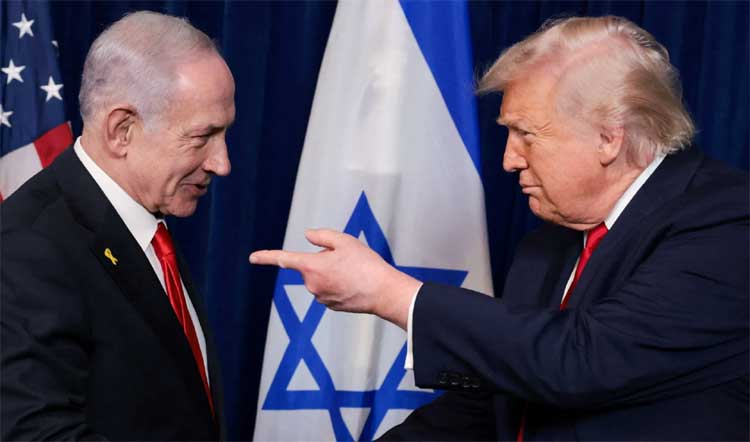
Dozens of civil rights and advocacy groups are calling on the US Congress to remove a provision from the 2027 National Defense Authorization Act (NDAA) that would expand military technology cooperation between the United States and Israel.
The provision, Section 219, would accelerate joint development of military technologies and create frameworks for joint ventures, licensing agreements and US-based co-production partnerships involving Israeli defense companies. The NDAA was passed by the House of Representatives in July and is now awaiting Senate action.
In a letter sent Thursday to the leaders of the House and Senate Armed Services Committees, 56 organisations described deeper integration with Israel’s defense industry as “exceptionally dangerous” and urged lawmakers to scrap the provision.
The signatories include Amnesty International USA, the National Lawyers Guild, as well as Arab and Jewish advocacy organisations.
The groups argued that closer defense-industry ties could create additional avenues for Israeli influence within the US defense technology sector at a time when US public opinion and policy interests are increasingly diverging from those of Israel.
Israel remains one of Washington’s closest Middle Eastern allies, with extensive cooperation between the two countries on defense and intelligence. Supporters of Section 219 argue that stronger technological partnerships could accelerate military innovation and development.
However, Israeli Prime Minister Benjamin Netanyahu said in a May interview with CBS that he hoped Israel could reduce its reliance on US military support within a decade. In a June letter to a US congressman, Netanyahu said Israel should move “from aid recipient to partner.”
Democratic Senator Chris Van Hollen has also opposed the provision, arguing that expanding military technology cooperation with the Netanyahu government is not in the US national interest.
The debate comes amid declining US public support for Israel since the Gaza war began in 2023, particularly among Democratic voters. A June Quinnipiac University poll found that 48% of voters and 66% of Democrats believed the US was too supportive of Israel, compared with 16% and 20%, respectively, when the question was first asked in 2017.
Critics of the provision have also pointed to Israel’s conduct during the Gaza war and rising settler violence against Palestinians in the occupied West Bank, arguing that such developments should rule out deeper military cooperation.
The October 7, 2023, Hamas attack on Israel killed nearly 1,200 Israelis and foreign nationals and resulted in hundreds of people being taken hostage, according to Israeli authorities. More than 73,000 Palestinians have since been killed during Israel’s military campaign in Gaza, according to Gaza health officials.
Meanwhile, a 10-year US-Israel memorandum of understanding providing $3.8 billion in annual US military assistance to Israel is set to expire in 2028. Discussions are already underway over the future of US military support beyond that date.
Lawmakers have previously attempted to remove Section 219 from the NDAA. Republican Representative Thomas Massie of Kentucky and Democratic Representative Ro Khanna of California introduced an amendment seeking to block the provision, but it was not included in the House-passed version of the bill.
The House and Senate must now approve their respective versions of the NDAA and reconcile differences before sending a final version to the White House. The legislation must then be signed by President Donald Trump or face a veto.
Comments are closed.