
25 years after 9/11, the lessons of terrorism remain unfinished

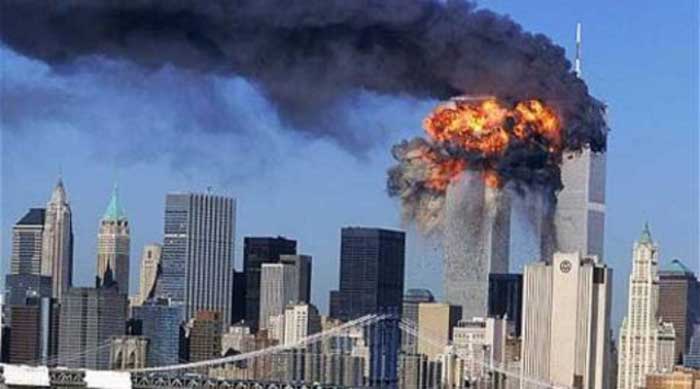
Hindsight is often the clearest lens through which to examine foresight. Twenty-five years after the September 11 attacks, the world continues to debate not only how the attacks were planned and executed, but also the ideology and geopolitical conditions that enabled Al Qaeda to emerge as a global terrorist threat.
The attacks killed 2,977 people, in addition to the 19 hijackers, and fundamentally altered global security policy. Yet reducing 9/11 to the actions of a handful of extremists risks overlooking the broader ideological, political and geopolitical environment in which Al Qaeda operated.
At the time, the United States was the world’s dominant power following the collapse of the Soviet Union. The US and its allies had also spent years supporting Afghan forces fighting the Soviet occupation, creating an environment in which some Islamist fighters were once viewed through the prism of Cold War strategy rather than as a future global terrorist threat.
Pakistan, meanwhile, was an important US partner. The subsequent revelation that Al Qaeda had operated across the Afghanistan-Pakistan border exposed the complexity of that relationship. Khalid Sheikh Mohammed, the alleged principal architect of the 9/11 attacks, was born in Pakistan, while Osama bin Laden was eventually found and killed by US forces in Abbottabad in 2011.
The aftermath of 9/11 also transformed Afghanistan. The Taliban regime, which had taken power in 1996, was removed by the US-led intervention after refusing to hand over bin Laden. The United States subsequently remained in Afghanistan for nearly two decades before withdrawing in 2021, allowing the Taliban to return to power.
The experience raised a fundamental question: can military intervention defeat a terrorist movement without addressing the political, institutional and ideological conditions that allow such movements to survive?
The unresolved regional equation
The geopolitics surrounding terrorism have become even more complicated since 9/11. Pakistan has long faced accusations of allowing militant groups to operate from its territory, while Iran has also been accused by Washington and others of maintaining relationships with militant organisations.
At the same time, the transformation of Al Qaeda-linked networks into newer jihadist organisations, including ISIS, demonstrated how quickly extremist movements can evolve. ISIS went on to seize territory in Iraq and Syria and carry out mass atrocities against civilians.
Today, Al Qaeda and Islamic State-linked organisations remain active in parts of Africa, the Middle East and Asia. Their continued presence demonstrates that the problem has not disappeared simply because the original leadership of Al Qaeda was dismantled.
The ideological challenge is equally difficult. Extremist interpretations of Islam that have historically been used by jihadist organisations to justify violence continue to circulate, raising questions about the effectiveness of counter-radicalisation programmes and the role of religious and political institutions in confronting extremism.
Has the world learned from 9/11?
That leads to the central question, 25 years after the attacks: how much has actually changed?
Jihadist organisations remain capable of exploiting weak states, civil wars, economic grievances and political instability. Their networks have become more fragmented, but fragmentation has not necessarily meant disappearance.
For India, the threat carries an added dimension because of its proximity to Pakistan and the history of cross-border militancy. New security challenges can also emerge through instability in neighbouring countries and the movement of extremist networks across South Asia.
The United States, meanwhile, continues to wield enormous military and economic influence. But the experience of Afghanistan and other interventions has demonstrated the limits of military power when it is not accompanied by sustainable political settlements and effective governance.
Twenty-five years after 9/11, the greatest lesson may therefore be that terrorism cannot be treated simply as a military problem. Ideology, financing, recruitment, state capacity, governance and regional geopolitics all form part of the equation.
The world has dismantled terrorist organisations, eliminated senior leaders and disrupted countless plots since 2001. But extremist movements have repeatedly adapted.
The challenge now is to ensure that the lessons of September 11 are not reduced to history. The danger lies not only in forgetting what happened, but in failing to understand why movements capable of producing such violence continue to find space to survive.
Comments are closed.