
FCRA Bill 2026: India’s US envoy debunks ‘myths’ over NGO funding, religious charities

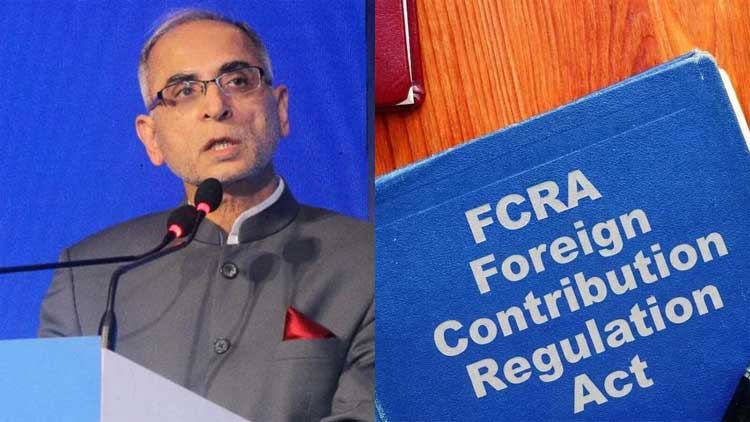
Amid growing controversy over the Foreign Contribution (Regulation) Amendment Bill, 2026, India’s ambassador to the United States, Vinay Mohan Kwatra, has sought to counter criticism of the proposed legislation, saying it is aimed at improving transparency, governance and clarity in the regulation of foreign funds.
In a series of posts on X, Kwatra addressed five claims surrounding the bill, including allegations that it targets specific religions, restricts NGOs, or allows the government to seize assets belonging to religious charities and other organisations.
FCRA Bill 2026: Five ‘myths’ debunked
Myth: The government is trying to stop foreign aid to civil society.
Kwatra said regulating foreign financial flows in public and political spaces is a sovereign measure driven by national security concerns and is common in several democracies.
He noted that India introduced its first FCRA in 1976, followed by a new framework in 2010 and amendments in 2016, 2018 and 2020.
According to Kwatra, the 2026 legislation is the next step towards greater transparency and clearer rules. He said the law does not prohibit Indian organisations from receiving foreign donations and does not target law-abiding civil society groups.
Tens of thousands of associations registered under the FCRA continue to receive foreign contributions for activities including healthcare, education, disaster relief, research and humanitarian assistance, he said.
Myth: FCRA has harmed NGOs and the new bill will further restrict their operations.
Kwatra argued that foreign contributions to registered organisations have actually increased over the years, rising from about $1.2 billion in 2010-11 to $2.67 billion in 2024-25.
He said India has more than 3 million NGOs, while only about 14,450 currently hold FCRA registration, meaning the overwhelming majority of civil society organisations are outside the law’s scope.
“FCRA does not stop anyone from accepting foreign charity, research grants or humanitarian aid,” Kwatra said, adding that organisations are required to register, receive funds through prescribed procedures and report how the money is used.
Myth: The bill will allow the government to seize NGO assets, including religious properties, hospitals and schools.
Kwatra said the government has always provided a legal framework for receiving and using genuine foreign contributions.
He said that when an organisation’s FCRA registration is cancelled or surrendered, foreign contributions and assets created from those funds already vest with a state government authority under provisions in force since 2010.
The proposed legislation, he said, would create a designated authority to safeguard such assets while also providing a mechanism for organisations to regain them.
If an organisation restores its FCRA registration, the assets and unused funds would be returned in full, according to Kwatra.
He also said places of worship would receive specific protection. If a cancelled association had created property linked to a place of worship, the property would be transferred to another FCRA-registered organisation of the same faith to ensure continuity of worship.
Myth: The FCRA specifically targets a particular religion or community.
Kwatra rejected the allegation, saying the law applies uniformly to organisations regardless of their religion, community or ideology.
He said faith-based welfare activities, including religious education, maintenance of places of worship and charitable work, remain eligible for foreign funding.
Myth: India is an outlier in regulating foreign funding.
Kwatra said several other countries have laws governing foreign financial flows.
He cited the US Foreign Agents Registration Act (FARA), enacted in 1938, and the Foreign Account Tax Compliance Act (FATCA), introduced in 2010. He also pointed to legislation in Australia in 2018 and Canada in 2024, while noting that the UK’s scheme came into force in July 2025 and the European Union is currently legislating in the area.
What is the FCRA Bill 2026?
The Foreign Contribution (Regulation) Amendment Bill, 2026, was introduced in the Lok Sabha on March 25. The proposed legislation seeks to regulate foreign donations received by NGOs, trusts and associations.
A key provision creates a “Designated Authority” to manage assets created from foreign contributions if an organisation’s FCRA registration is cancelled, surrendered or not renewed.
The proposal has drawn criticism from the Opposition and civil society groups, who have raised concerns that organisations could lose access to assets, including those funded through domestic as well as foreign contributions, if their FCRA registration is not renewed.
Opposition parties have also alleged that the legislation could disproportionately affect minority-run organisations and religious institutions.
US Congressman raises concerns
The controversy has also drawn attention in the United States. US Congressman Riley Moore criticised the proposed legislation, alleging that it could allow the Indian government to take control of churches and religious charities.
The Republican representative from West Virginia warned that the legislation could affect ties between New Delhi and Washington.
“Christians have been in India since St Thomas the Apostle travelled to the Malabar Coast,” Moore wrote on X, while expressing concern over the proposed changes to FCRA rules.
India’s Ministry of External Affairs rejected the suggestion that the legislation was an issue for foreign intervention, describing it as an internal matter.
MEA spokesperson Randhir Jaiswal said legislative matters concerning India were the country’s internal affairs and decisions were taken by Parliament. He also pointed out that several countries, including the United States, regulate the flow of foreign funds.
Comments are closed.