
UN Security Council begins voting process to choose next secretary-general

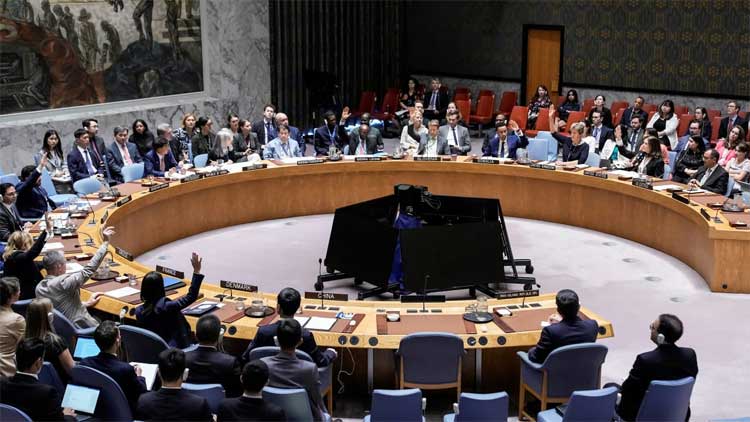
The UN Security Council on Thursday launched the process to select the next United Nations secretary-general, holding its first confidential “straw poll” to gauge support for the seven candidates vying to succeed Antonio Guterres, whose second five-year term ends on December 31, 2026.
The candidates are Michelle Bachelet (Chile), Maria Fernanda Espinosa (Ecuador), Rafael Grossi (Argentina), Rebeca Grynspan (Costa Rica), Olara Otunnu (Uganda), Carolyn Rodrigues-Birkett (Guyana), and Macky Sall (Senegal).
While Grossi, the head of the International Atomic Energy Agency, is the best-known contender internationally, diplomats say there is no clear frontrunner in what is expected to be a months-long selection process.
Pakistan’s UN ambassador Asim Ahmad described the first vote as an important step toward selecting the best candidate. However, diplomats remain reluctant to predict the outcome, noting that the five permanent Security Council members — the United States, Russia, China, France and the United Kingdom — have not yet revealed their preferences.
To secure the nomination, a candidate must win at least nine votes from the 15-member Security Council while avoiding a veto from any of the five permanent members. The successful nominee will then be submitted to the UN General Assembly for formal approval.
The confidential “straw poll” system, introduced in the early 1980s, allows council members to anonymously mark each candidate as “encourage”, “discourage” or “no opinion”. In later rounds, ballots cast by permanent members are distinguished from those of elected members, helping identify potential vetoes without revealing which country opposed a candidate.
Analysts say the initial rounds are likely to eliminate candidates with little support rather than produce an outright favourite.
This year’s race has also renewed calls for the UN to appoint its first-ever woman secretary-general. With the position traditionally rotating among regions, many diplomats argue it is Latin America’s turn to hold the office, strengthening the case for one of the region’s female candidates. Six contenders have already participated in public hearings before the General Assembly, while Ugandan candidate Olara Otunnu entered the race later and did not take part in the earlier sessions.
Comments are closed.