
UN warns of growing politicisation of refugees, asylum rights

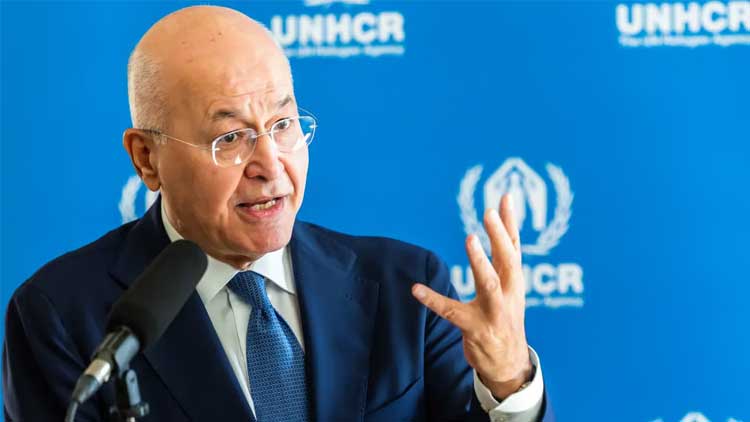
The United Nations on Tuesday warned that refugees fleeing war and persecution are increasingly facing barriers to seeking asylum, as political debates over migration intensify around the world.
Speaking at an event marking the 75th anniversary of the 1951 Refugee Convention in Geneva, UN refugee chief Barham Salih urged governments to shift their focus from merely managing displacement to addressing its root causes.
“We gather at a time of increasingly politicized debates about refugees and asylum,” said Salih, a former Iraqi president and refugee. He warned that displaced people are too often made “scapegoats” for broader social, economic and political concerns instead of being treated with dignity.
According to the UN refugee agency (UNHCR), 117.8 million people were forcibly displaced by the end of 2025, down from the record 123.2 million in 2024. Of these, 35.6 million were refugees, with most coming from Venezuela, Ukraine, Syria, Afghanistan and Sudan. The decline marked the first drop in a decade, largely due to refugees returning from Iran and Lebanon, often under difficult and unsafe conditions.
Syrian Olympic swimmer Yusra Mardini, who fled the country’s civil war before competing at the 2016 and 2020 Olympics, recalled her emotional return to Syria earlier this year. She described seeing families return home only to find their communities devastated by years of conflict.
UN Secretary-General Antonio Guterres said the Refugee Convention had saved millions of lives since its adoption after World War II, but warned that its promise was now under strain as conflicts multiply and asylum rights are increasingly “questioned, restricted, or denied.”
The UNHCR also highlighted a severe funding crisis. After major cuts in international aid, including from the United States, the agency’s budget fell by around 35% last year, forcing it to eliminate nearly 5,000 jobs. Salih called for greater international support while stressing that refugees fleeing violence and persecution must remain protected under international law.
Comments are closed, but trackbacks and pingbacks are open.