
Recognise Israel First: Trump Sets Condition for US-Saudi Nuclear Deal

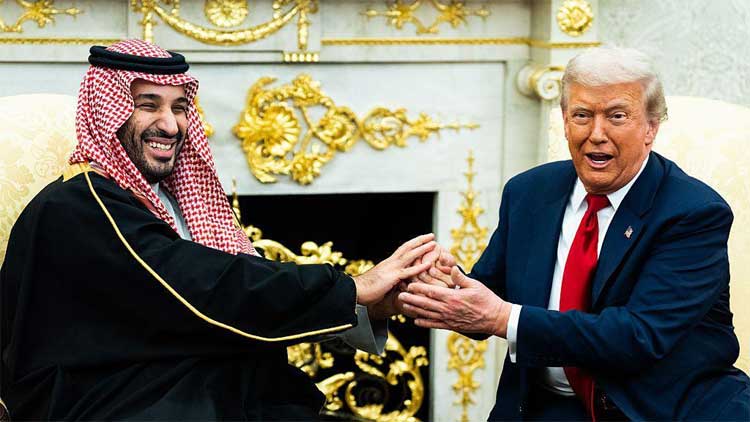
A day after approving a landmark civilian nuclear agreement with Saudi Arabia, US President Donald Trump on Thursday said the deal will move forward only if the kingdom formally recognises Israel by joining the Abraham Accords.
In a post on Truth Social, Trump said the agreement for Saudi Arabia’s civilian nuclear programme “will be approved, but is totally subject” to Riyadh joining the US-brokered normalisation pact with Israel.
He stressed that the agreement is strictly for peaceful purposes and would not permit uranium enrichment for military use.
Saudi Arabia, however, has consistently maintained that it will not normalise ties with Israel without the establishment of an independent Palestinian state — a condition repeatedly rejected by Israeli Prime Minister Benjamin Netanyahu.
What is in the US-Saudi nuclear deal?
The agreement, signed on Wednesday by US Energy Secretary Chris Wright and his Saudi counterpart, allows Saudi Arabia to develop a civilian nuclear energy programme with American technology and expertise.
The 30-year pact, known as a “123 Agreement”, is expected to involve US companies in building Saudi Arabia’s nuclear infrastructure. It also permits the kingdom to enrich fuel for civilian reactors, while setting limits on international inspections. The deal will now be sent to the US Congress for review.
According to reports, Saudi Arabia will not be required to sign the International Atomic Energy Agency’s Additional Protocol, which provides for enhanced monitoring and verification of nuclear activities.
What are the Abraham Accords?
The Abraham Accords, launched by Trump in 2020, aim to normalise diplomatic, economic and security ties between Israel and Arab countries.
The United Arab Emirates and Bahrain were the first to establish formal relations with Israel, followed by Morocco and Sudan. Earlier this year, Trump also urged Saudi Arabia, Pakistan, Qatar, Turkey and Jordan to join the accords as part of a wider regional diplomatic initiative.
Comments are closed.