
NATO’s Trump challenge deepens: Why Mark Rutte’s balancing act is getting harder ahead of Turkiye summit

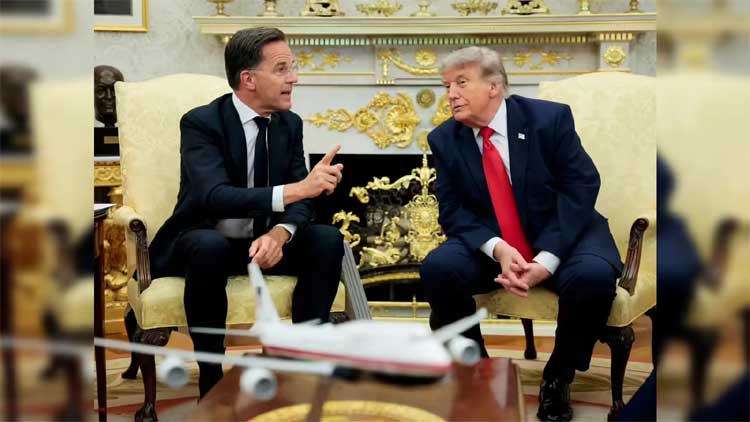
Since taking over as NATO secretary-general nearly two years ago, Mark Rutte has devoted much of his tenure to one overriding mission: keeping the United States firmly committed to the alliance under US President Donald Trump. His strategy has often relied on generous praise and personal diplomacy to prevent Trump from following through on repeated threats to distance Washington from NATO.
But ahead of this week’s NATO summit in Turkiye, the challenge has evolved.
For years, Trump’s biggest grievance was that European allies were not spending enough on defence. NATO members largely addressed that criticism by agreeing to significantly boost military spending, narrowing the gap with the United States as a share of GDP.
The problem now is no longer about pledges on paper. It is about converting higher defence budgets into credible military capabilities at a time when European governments fear a more aggressive Russia and question how dependable US security guarantees remain.
Rutte made another high-profile effort to reassure Trump during a White House meeting last month, presenting a gold-lettered chart titled “The Trump Trillion” that highlighted $1.2 trillion in additional defence spending by European allies and Canada since 2017. The presentation also showcased thousands of US jobs linked to European military purchases and a $300 billion order backlog for American defence companies.
The display, however, failed to fully impress Trump. He instead criticised several NATO allies for refusing to participate in the US-Israeli military campaign against Iran, saying, “We don’t need their money… I just want loyalty.”
Trump even suggested he might have skipped the summit altogether had it not been hosted by Turkish President Recep Tayyip Erdogan, one of the few foreign leaders with whom he has maintained a warm relationship.
Flattery as NATO’s diplomatic strategy
The role of NATO’s secretary-general has traditionally centred on building consensus among the alliance’s 32 members. Under Trump, however, both Rutte and his predecessor, Jens Stoltenberg, have found themselves focused on a more fundamental task: preventing the United States from drifting away from NATO.
Trump has repeatedly questioned NATO’s value, floated withdrawing US troops from Europe, cast doubt on defending allies that fail to meet defence targets and even threatened to take control of Greenland, a territory belonging to NATO ally Denmark.
Rutte has responded with a carefully calibrated strategy of public praise and private persuasion. During his Oval Office visit, he described Trump as the “leader of the free world” while highlighting the economic benefits flowing to the United States from increased European defence spending. He also gently countered Trump’s criticism over Iran by pointing out that thousands of US aircraft had operated from European bases before April’s ceasefire.
Uncertainty over US military commitment
Beyond rhetoric, European allies are increasingly concerned about the future of America’s military presence.
The Pentagon recently informed NATO partners that it would reduce the forces and military assets available for alliance operations if a member came under attack. Trump has also delivered conflicting messages about whether US troop levels in Europe would be cut or expanded.
The uncertainty comes as Russia continues to test European security through increased military activity, including drone operations near military installations across several countries.
A more difficult summit
Last year’s NATO summit in The Hague was widely seen as a success. Rutte secured broad backing for ambitious defence spending commitments, and Trump departed praising NATO members as “a nice group of people.”
This year’s gathering in Turkiye presents a far more complex landscape.
Rutte hopes to convince Trump that Europe’s higher defence spending will allow Washington to focus increasingly on challenges posed by China while Europeans shoulder greater responsibility for supporting Ukraine and deterring Russia.
Whether that argument satisfies Trump remains uncertain. His latest demand—for “loyalty” rather than simply higher defence spending—is far less tangible and much harder for allies to demonstrate.
As former secretary-general Jens Stoltenberg reflected in his memoir about NATO’s turbulent 2018 summit, the alliance’s credibility ultimately rests on America’s commitment to collective defence. If a US president openly questions that commitment, the foundation of NATO’s security guarantee itself comes under strain.
Comments are closed.