
US, Iran sign interim deal to end war, ease sanctions and reopen Strait of Hormuz

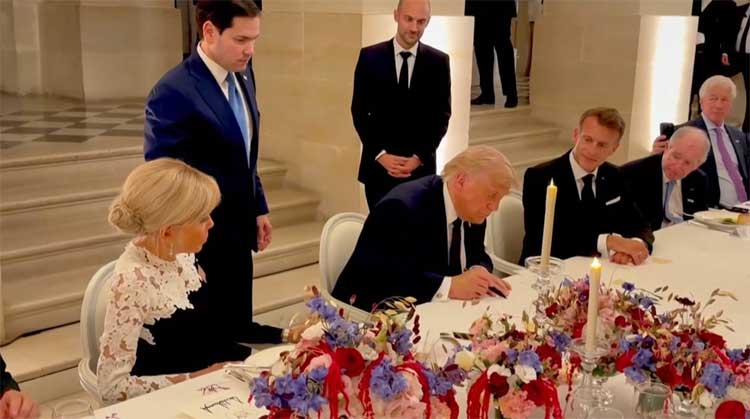
US President Donald Trump and Iran signed an interim agreement on Wednesday that halts hostilities, launches fresh negotiations over Tehran’s nuclear programme and grants Iran immediate sanctions relief, including permission to resume oil exports.
The agreement, brokered with the help of Pakistani Prime Minister Shehbaz Sharif, takes immediate effect and sets a 60-day deadline for reaching a comprehensive deal on Iran’s nuclear future. While Trump described the accord as “very strong,” he also warned that military action could resume if negotiations fail.
The deal was signed by Trump during a dinner with French President Emmanuel Macron at the Palace of Versailles, while Iranian President Masoud Pezeshkian signed the accord in Tehran. Though the full text has not been formally released by Washington, draft details disclosed by US officials and Iranian state media indicate that the agreement largely restores conditions that existed before the war.
Key provisions include an immediate ceasefire, the reopening of the Strait of Hormuz, renewed US-Iran nuclear talks and limited sanctions waivers allowing Iran to sell oil on global markets. The accord also includes a commitment to Lebanon’s territorial integrity amid ongoing tensions involving Israel and Hezbollah.
The agreement marks a significant shift in US policy. Iran will be allowed to resume oil exports before making major nuclear concessions, giving Tehran access to a critical source of revenue. The deal also envisages the eventual lifting of broader US and UN sanctions, although those steps remain tied to progress in future negotiations.
Critics are likely to question the scale of concessions offered to Tehran. The arrangement goes beyond the sanctions relief contained in the 2015 nuclear agreement, which Trump withdrew from during his first term, calling it the “worst deal ever.” Under the new framework, the International Atomic Energy Agency will oversee the dilution of Iran’s stockpile of highly enriched uranium, but details of Tehran’s long-term nuclear commitments remain unclear.
The accord could also prove politically challenging for Israeli Prime Minister Benjamin Netanyahu, who has opposed any settlement that leaves Iran with a significant nuclear infrastructure and has rejected demands linked to an Israeli withdrawal from parts of Lebanon.
Economically, the agreement offers immediate relief to global markets. The reopening of the Strait of Hormuz—through which roughly a fifth of the world’s traded oil and natural gas passes—could ease energy prices after months of disruption caused by the conflict. The deal also calls for the lifting of restrictions on Iranian ports and a gradual return of shipping traffic to pre-war levels.
While the agreement stops the fighting for now, its success will depend on whether Washington and Tehran can transform a fragile ceasefire into a lasting settlement over Iran’s nuclear ambitions and regional role.
Comments are closed.