
Bonn Climate Conference 2026: Geopolitical Tensions Threaten to Eclipse Climate Goals Ahead of COP31

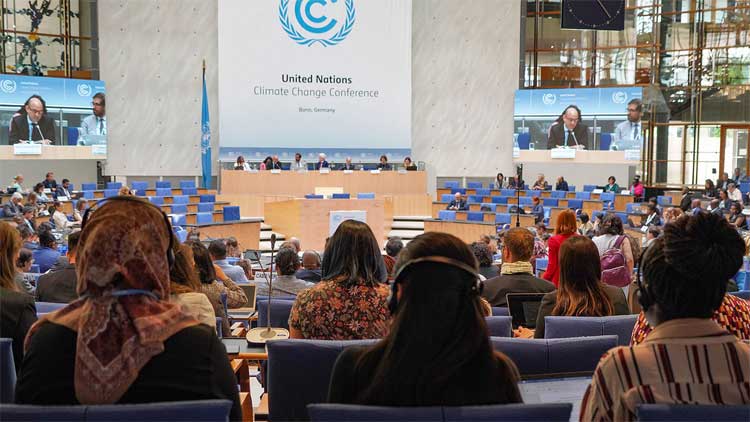
As negotiators convene at the Bonn Climate Conference (SB64) from June 8 to 18 to prepare the agenda for COP31, climate experts, diplomats and policymakers are warning that escalating geopolitical tensions, energy security concerns and chronic shortfalls in climate finance are threatening to derail global climate action at a critical moment.
Speaking at a June 8 discussion titled The Climate Conundrum: Global Geopolitics and Missed Opportunities, organised by The Energy and Resources Institute (TERI), experts argued that the world is entering a more fragmented geopolitical era just as climate impacts intensify, making it increasingly difficult to mobilise the finance, technology and political consensus needed to meet global climate goals.
The concerns come ahead of COP31, which will be jointly hosted by Australia and Türkiye later this year. The summit is expected to focus on accelerating the clean energy transition, expanding climate finance, growing green industries and strengthening support for climate-vulnerable nations, particularly in the Pacific region.
At the opening of the Bonn talks, UN Climate Change Executive Secretary Simon Stiell urged governments to prioritise implementation over revisiting long-standing divisions. Describing climate change as “the hardest, but most important, thing humanity has ever tried to do together,” Stiell called for faster action as economies grapple with worsening heatwaves and rising fossil fuel costs linked to the ongoing conflict involving Iran. He also emphasised the importance of advancing the Global Climate Action Agenda, with COP31 expected to focus on themes including energy security, food systems, methane reduction and urban resilience.
Rebuilding Trust Ahead of COP31
Australia has identified trust-building as a central objective of its COP31 presidency. Carly Partridge, minister counsellor at the Australian High Commission in New Delhi, said the summit’s priorities include accelerating the global shift to clean energy, mobilising finance and investment, expanding green industries and ensuring the concerns of vulnerable Pacific nations remain at the forefront.
She stressed that climate diplomacy must move away from confrontation and towards collaboration.
“Listen. Find common ground. Understand. Look for solutions. Trust and respect. That is the characteristics and qualities that we wish to bring to our COP,” Partridge said.
She also highlighted Australia’s growing cooperation with India in areas such as solar energy deployment, renewable technologies and critical minerals.
Climate Finance Remains a Major Obstacle
Suruchi Bhadwal, director of TERI’s Earth Science and Climate Change Division and an author with the Intergovernmental Panel on Climate Change (IPCC), warned that the world remains significantly off track in achieving the emissions reductions needed to limit global warming.
Rising temperatures continue to fuel more frequent and severe heatwaves, floods, droughts and extreme rainfall events. Current national policies and net-zero commitments, she noted, remain insufficient even to keep warming below 2°C.
Bhadwal identified climate finance as one of the most persistent barriers to progress.
“Finance has always been limited to be able to help us with the problems that we face. We do not have enough resources for the kind of climate action we are talking about that is needed by the world today,” she said.
She argued that all countries require greater access to finance, technology and capacity-building support if climate goals are to be achieved.
Geopolitical Rivalries Reshape Climate Priorities
A recurring theme during the discussion was the growing influence of geopolitics on climate policy.
According to Bhadwal, the world is shifting away from an era of deep globalisation towards a more fragmented and multipolar order shaped by military conflicts, energy security concerns, technological competition, artificial intelligence and semiconductor supply chains.
This changing landscape is forcing countries such as India to balance development priorities, energy security and climate commitments simultaneously.
Rising oil prices, supply chain disruptions and geopolitical instability are increasingly drawing attention toward immediate economic and strategic concerns, creating the risk that climate action could lose political momentum.
Former Environment Secretary Leena Nandan warned that climate change remains a global challenge that transcends national borders.
“Nature knows no boundaries. These are artificial constructs. The issue of public good, of global good, somewhere has got completely relegated to the background,” she said.
India Stresses Equity and Development
Indian officials reiterated that climate negotiations cannot be separated from development needs.
Acquino Vimal, Joint Secretary in the Ministry of External Affairs responsible for India’s engagement with the UN’s economic and social bodies, said climate negotiations continue to move slowly because countries face vastly different economic realities.
“Everybody keeps saying that there is no success in climate change if India does not deliver. But then what does that mean? Should we stay at this level of 3,000 per capita income? Is that what the world wants India to do?” he asked.
Vimal argued that developing countries cannot be expected to enhance climate ambition without meaningful support through finance, technology transfer and capacity building.
“There is always this push that let’s be more ambitious. But ambitious for what?” he said.
He also cautioned that climate discussions often overlook practical implementation challenges, particularly around financing.
“When the conversation happens, they say, where is the money? Where is the profit? Where are my returns on investment?” he noted.
India’s Renewable Energy Success Offers Hope
Despite concerns over the pace of international climate negotiations, speakers pointed to India’s renewable energy expansion as evidence that climate action and economic growth can go hand in hand.
Ajay Shankar, former secretary of the Department of Industrial Policy and Promotion and Distinguished Fellow at TERI, described India’s solar energy programme as one of the country’s most successful policy achievements.
When the National Solar Mission was launched, solar power was more than four times as expensive as conventional electricity, with an initial target of 20,000 megawatts by 2020. India has since installed roughly 150,000 megawatts of solar capacity and added around 40,000 megawatts in the past year alone, largely driven by private investment.
According to Shankar, policy measures that reduced investment risks and provided long-term certainty were critical to this success.
“Indian policy succeeded in de-risking investment by assuring prices and returns to investors,” he said.
He suggested that similar strategies could accelerate investment in emerging sectors such as green hydrogen and low-carbon manufacturing.
From Ambition to Action
The discussions underscored a central challenge facing global climate diplomacy ahead of COP31: while climate pledges and targets have multiplied, implementation continues to lag behind.
Participants repeatedly pointed to the widening gap between commitments made at international conferences and action on the ground. They argued that future climate summits must focus less on announcing new goals and more on delivering existing promises.
Scaling renewable energy deployment, attracting private investment, expanding grant-based climate finance and strengthening technology transfer mechanisms were identified as key priorities.
For India and many other developing countries, experts said the path forward lies in integrating climate action with economic development rather than treating them as competing objectives. At the same time, developed nations face growing pressure to honour long-standing commitments on climate finance and implementation support as the world races to keep global climate goals within reach.
Comments are closed.