
Ebola Border Curbs Choke Uganda-Congo Trade, Leave Truckloads of Food at Risk of Spoiling

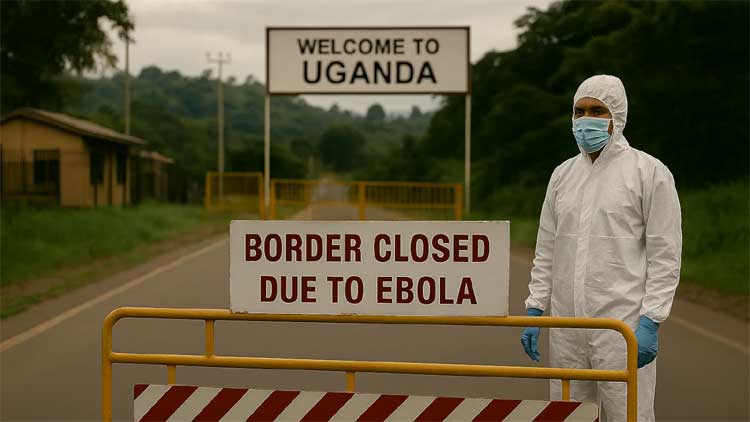
As Uganda tightens measures to prevent the spread of Ebola from neighboring Congo, traders along the busy Mpondwe border crossing are counting mounting losses, with truckloads of perishable goods stranded for days and livelihoods hanging in the balance.
Leah Masika, a Ugandan trader, watched helplessly as her shipment of plantains sat idle in a growing convoy of trucks stretching along both sides of the border. Bound for markets around Kampala, the cargo had already begun leaking water and risked spoiling within hours.
“Our things are here rotting,” she said, appealing for authorities to allow movement through the crossing.
Uganda shut its western border with the Democratic Republic of Congo on May 28, roughly two weeks after Congo declared an Ebola outbreak in the eastern province of Ituri. While emergency, humanitarian, security and cargo-related exceptions were initially allowed, authorities in Uganda’s Kasese district have since tightened restrictions amid concerns that the outbreak is spreading faster than containment efforts.
The tougher controls have left traders frustrated, particularly those dealing in food and other perishable goods. At the Mpondwe border post, clearing agent Sylvia Asiimwe pointed to a long queue of trucks, including several carrying fish imported from China and destined for the Congolese cities of Beni and Butembo.
“The fish is going to spoil. So much money,” Asiimwe said, arguing that the destination cities lie in North Kivu province rather than Ebola-hit Ituri.
Trade Hub Under Pressure
The Uganda-Congo frontier is a vital commercial artery, with trade flowing through formal crossings and numerous informal footpaths. Mpondwe is Uganda’s largest border post for informal exports, which were valued at an estimated $131 million in 2023, according to official statistics.
Since the latest restrictions took effect, businesses around the crossing have slowed dramatically. Some shops have closed, while casual workers who depend on cross-border commerce have been left without income.
“The situation is bad,” said roadside snack vendor Ismail Mumbere. “A lot of people earn from here, in many businesses. But now the government has told us there is Ebola. Ebola has wasted our work.”
Authorities Defend Restrictions
The current outbreak in Congo is suspected to have infected more than 1,000 people, though confirmed numbers remain lower because many deaths occur outside health facilities before testing can be conducted.
While the World Health Organization declared the outbreak a public health emergency of international concern and advised against blanket border closures, it has also warned that neighboring countries face a high risk of transmission.
Kasese surveillance officer Arafat Bwambale defended the restrictions, saying authorities are seeking to limit human movement associated with cargo transport.
“With movement of cargo, and maybe trucks, is mobility of people, and we want to reduce that,” he said.
Officials are also attempting to prevent unauthorized crossings through more than two dozen informal footpaths along the border.
The outbreak has raised particular concern because it involves the rare Bundibugyo strain of Ebola, against which existing vaccines and treatments have limited effectiveness.
Uganda on High Alert
Uganda has confirmed 15 Ebola cases linked to the outbreak after infected Congolese nationals traveled to Kampala seeking medical care before the epidemic was officially identified.
The country has extensive experience battling Ebola, having endured multiple outbreaks since 2000. Health officials in Kasese say the region’s referral hospital has an isolation center and laboratory capable of producing Ebola test results within six hours. Recent tests on 41 people in the district all returned negative.
Despite those preparations, authorities are considering even stricter controls on cargo movement, a prospect that is causing anxiety among traders who depend on the border crossing for business.
Masika says she will stop sourcing goods from Congo until the outbreak is contained. Yet she fears substantial losses if her current shipment fails to reach customers around Kampala, where plantains are a staple food.
With 50 bags of produce worth about $44 each at stake, she joined other traders in pleading for relief.
“We are begging them to help us and open the border,” she said. “We will not go back to Congo.”
Comments are closed.