
Bill seeking three-year pause on H-1B visa program introduced in U.S. Congress

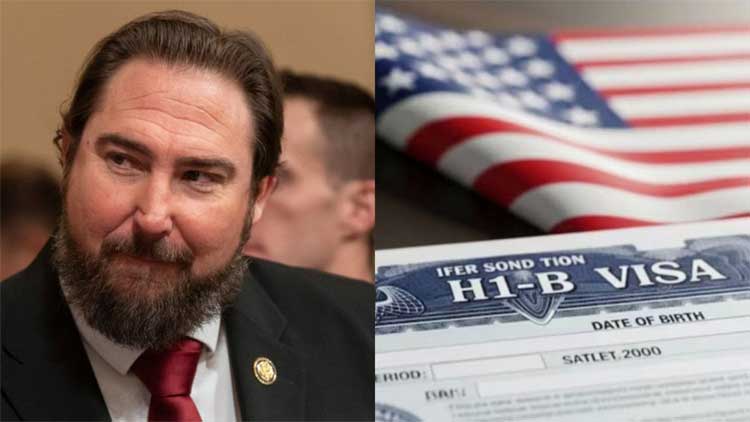
A group of Republican lawmakers has introduced a bill in the U.S. Congress seeking a three-year pause on the H-1B visa program, arguing that it has been misused to replace American workers with lower-cost foreign labour.
The legislation, titled the End H-1B Visa Abuse Act of 2026, was introduced by Eli Crane and co-sponsored by several Republican lawmakers, including Brian Babin, Brandon Gill, Wesley Hunt, Keith Self, Andy Ogles, Paul Gosar and Tom McClintock.
The bill proposes sweeping changes to the H-1B system, including cutting the annual cap from 65,000 to 25,000, setting a minimum salary of $200,000, and barring visa holders from bringing dependents to the United States.
It also seeks to replace the current lottery system with a wage-based selection process, require employers to certify that no qualified American workers are available and that no recent layoffs have occurred, and prohibit H-1B workers from holding multiple jobs. The legislation further aims to ban third-party staffing firms from employing H-1B workers.
Additional provisions include ending Optional Practical Training (OPT), preventing federal agencies from hiring nonimmigrant workers, and ensuring the visa remains temporary by blocking pathways to permanent residency. The bill would also require visa holders to leave the country before switching to another nonimmigrant status.
The H-1B programme is widely used by U.S. technology firms to hire skilled foreign professionals, with Indian workers forming one of the largest beneficiary groups.
Defending the proposal, Crane said the government must prioritise American workers over corporate interests. Other supporters echoed similar concerns, with Gosar claiming the programme has been “hijacked” to favour cheaper foreign labour, while Ogles argued it undermines domestic employment.
If passed, the bill would mark one of the most significant overhauls of the H-1B system in recent years, though it is likely to face intense debate in Congress.
Comments are closed.