
US predicts Iran war could end within weeks as oil prices surge

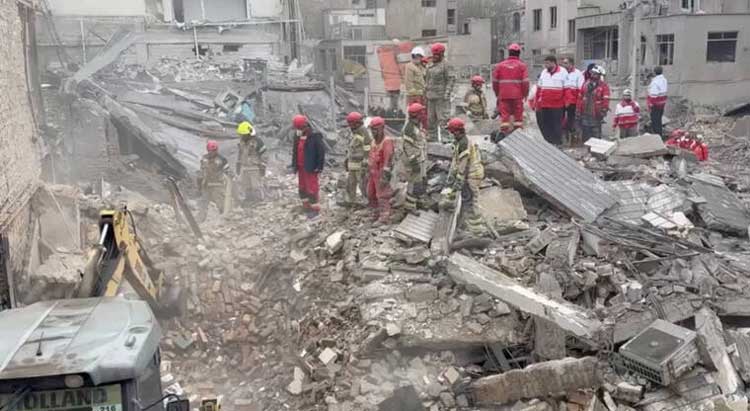
Donald Trump’s administration said Sunday the war between the United States, Israel and Iran could end within weeks, predicting that global energy prices would fall once the conflict subsides — even as Tehran insisted it remains “stable and strong” and prepared to fight for as long as necessary.
Economic concerns have intensified as crude prices hover near $100 a barrel following the effective closure of the Strait of Hormuz, a critical waterway through which roughly a fifth of the world’s oil and liquefied natural gas normally passes.
Trump threatened additional strikes on Iran’s main oil export hub, Kharg Island, over the weekend and said he was not ready to pursue a deal to end the conflict, which has rattled global energy markets.
According to a report by the Wall Street Journal, the US administration could announce as early as this week that several countries have agreed to form a coalition to escort commercial ships through the strategic waterway. Officials are still discussing whether the naval escort operations would begin before or after the fighting ends.
The White House did not immediately comment on the report.
Trump had earlier said the US Navy would “soon” begin escorting oil tankers through the region.
Iran rejects ceasefire claims
Trump has repeatedly suggested that Iran is seeking negotiations, but Iranian Foreign Minister Abbas Araghchi rejected that claim.
“We have never asked for a ceasefire, and we have never asked even for negotiations,” Araghchi said on the CBS program “Face the Nation.” “We are ready to defend ourselves for as long as it takes.”
Despite the standoff, US officials insisted the conflict may end relatively quickly.
US Energy Secretary Chris Wright said the fighting could conclude within weeks, easing pressure on energy markets.
“This conflict will certainly come to an end in the next few weeks — it could be even sooner,” Wright said on ABC’s “This Week.” “Once that happens, we’ll see supplies rebound and prices start to fall.”
Araghchi, however, projected confidence in Iran’s resilience.
“It’s not a war of survival. We are stable and strong enough,” he told CBS, accusing Washington of attacking Iran during ongoing negotiations over its nuclear program.
Trump escalates threats
As the war entered its third week, Trump said on Saturday that US strikes had “totally demolished” much of Kharg Island and warned of further attacks.
“We may hit it a few more times just for fun,” he told NBC News.
The comments signaled a sharp escalation from Trump, who previously said US strikes were limited to military targets on the island.
The war has spread across the Middle East and has killed more than 2,000 people so far, most of them in Iran and Lebanon.
Diplomatic efforts to halt the fighting have made little progress. According to Reuters, Washington has brushed aside attempts by regional allies to open negotiations.
Iran’s Islamic Revolutionary Guard Corps said Sunday it had launched additional missiles at Israel and at three US bases in the region.
However, Israel and Lebanon are expected to hold talks in the coming days aimed at securing a ceasefire that would involve disarming the Iran-backed group Hezbollah, two Israeli officials told Reuters.
Lebanon was drawn into the war after Hezbollah fired rockets at Israel following the killing of Iran’s supreme leader, prompting Israel to launch a major offensive in southern Lebanon.
War fuels global energy crisis
With global aviation disrupted and shipping routes uncertain, the conflict has triggered fears of a prolonged energy crisis.
Iran’s ability to disrupt traffic through the Strait of Hormuz — the passage for about 20% of global oil trade — is seen as one of the biggest risks to the world economy.
Although some Iranian vessels have continued to transit the waterway, most international shipping has avoided it since the United States and Israel launched large-scale strikes on Iran on February 28.
The International Energy Agency said Sunday that oil from emergency reserves will soon begin entering global markets, with member countries pledging to release nearly 412 million barrels to stabilize supplies.
Trump has urged countries heavily dependent on Gulf oil — including China, France, Japan, South Korea and the United Kingdom — to help reopen shipping lanes in the strait.
British Prime Minister Keir Starmer discussed the issue with Trump on Sunday, according to Downing Street.
Meanwhile, the Financial Times reported that European Union foreign ministers may consider expanding the EU’s Operation Aspides naval mission — currently protecting ships from Houthi attacks in the Red Sea — to cover the Strait of Hormuz as well.
However, German Foreign Minister Johann Wadephul expressed skepticism about such a move.
French President Emmanuel Macron said he had urged Iranian President Masoud Pezeshkian to restore freedom of navigation in the strait and end attacks against regional states.
France has been working with partners to organize a naval mission to secure the waterway once the security situation stabilizes.
Israel and Iran continue exchanging strikes
Fighting continued across the region on Sunday.
Iran’s Revolutionary Guards said they had launched new missile and drone barrages against targets in Israel and US military bases in the region.
Saudi Arabia said its air defenses intercepted 10 attacks.
Israel said its fighter jets struck additional targets in western Iran, including headquarters of the Revolutionary Guards and the Basij militia in the city of Hamadan.
According to a source familiar with Israel’s strategy, Israeli forces have begun targeting roads and bridges believed to be used by Revolutionary Guard commanders.
Meanwhile, Iranian authorities said dozens of people had been detained on suspicion of sharing intelligence with Israel.
Comments are closed.