China puts energy security and diplomacy ahead of support for Iran

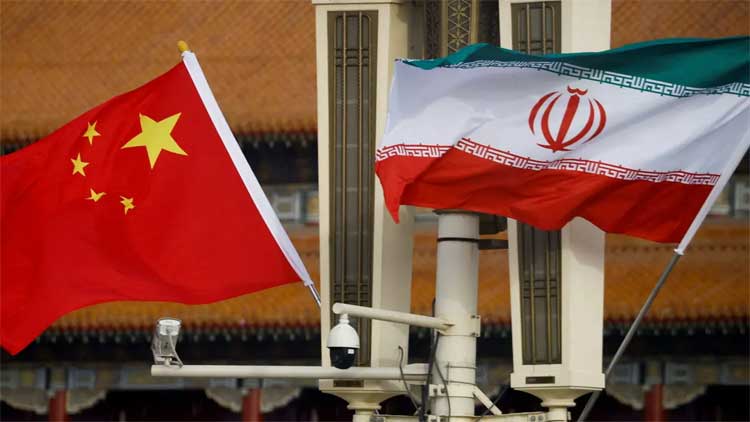
China has condemned the joint strikes by Israel and the United States on Iran, but analysts say Beijing is unlikely to risk its broader interests by confronting Washington or offering direct support to its long-time partner.
The escalating conflict in the Middle East has raised global concerns over a potential energy supply shock, particularly after shipping through the vital Strait of Hormuz was disrupted.
Iran’s Islamic Revolutionary Guard Corps said on Wednesday it had “complete control” of the strategic waterway while continuing missile and drone attacks across the Gulf.
China, the world’s largest oil importer, is among several major Asian economies that rely heavily on the narrow strait for energy supplies. However, experts say Beijing’s large strategic oil reserves will help it weather short-term disruptions while it focuses on other diplomatic priorities.
One of those priorities is an upcoming summit in China between President Xi Jinping and US President Donald Trump, which the White House says is set to begin on March 31.
“The Iran crisis is unlikely to derail the Trump-Xi summit unless the United States launches a sweeping crackdown on Iran–China oil flows,” Dan Wang, China Director at the Eurasia Group, told AFP.
“Beijing views Iran as a strategic partner rather than a military ally,” Wang said, adding that China also values its relations with other Gulf states, making direct military support beyond rhetoric highly unlikely.
Strategic buffer
China has expanded its diplomatic footprint in the Middle East in recent years, including brokering a landmark 2023 deal between rivals Iran and Saudi Arabia to restore relations.
Tehran later became a full member of the Shanghai Cooperation Organization, a geopolitical and economic bloc led by Beijing and Russia.
At the same time, China has grown increasingly dependent on the region to fuel its vast economy. According to analytics firm Kpler, China’s domestic crude production meets only about 30 percent of its demand, with the remainder supplied by imports.
The Middle East accounted for about 57 percent of China’s direct seaborne crude imports in 2025 — roughly 5.9 million barrels per day — including around 1.4 million barrels per day from Iran.
Despite this reliance, China has built extensive reserves to guard against supply shocks.
“Thanks to years of sustained stockpiling, China now holds roughly 1.2 billion barrels of onshore crude inventories,” Kpler analyst Muyu Xu said, adding that the reserves equal about 115 days of China’s seaborne crude imports.
“The sheer scale of China’s overall crude stockpiles provides a meaningful buffer, enabling the country and its refiners to weather short-term supply disruptions from the Middle East and resulting price spikes.”
Strong rhetoric, limited action
Beijing said on Sunday it “firmly opposes and strongly condemns” the US-Israeli strikes that killed Iran’s supreme leader Ayatollah Ali Khamenei.
“The most urgent task is an immediate cessation of military operations and preventing a spread and spillover of conflict,” Chinese foreign ministry spokeswoman Mao Ning told reporters.
She also confirmed that one Chinese citizen had been killed in Tehran during the conflict.
However, analysts say Beijing’s energy interests and its reluctance to become directly entangled in a confrontation with Washington mean that strong rhetoric is unlikely to translate into concrete action.
About half of China’s crude imports pass through the Strait of Hormuz, giving Beijing a strong incentive to keep energy supplies flowing, according to analysts at Capital Economics.
That is one reason China may avoid significantly increasing support for Iran — unlike its backing for Russia following the invasion of Ukraine.
“Another is that China would be wary of being seen to facilitate attacks on the United States,” the analysts said.
Kpler’s Xu added that Russia could emerge as a beneficiary of the conflict if Middle Eastern oil flows remain disrupted.
“Russian barrels are among the most immediately available alternatives for India and China to replace disrupted Middle Eastern supplies,” Xu said.
Comments are closed.