
Wildfire Risk Has Tripled Globally as Climate Change Fuels Extreme Fire Weather, Study Finds

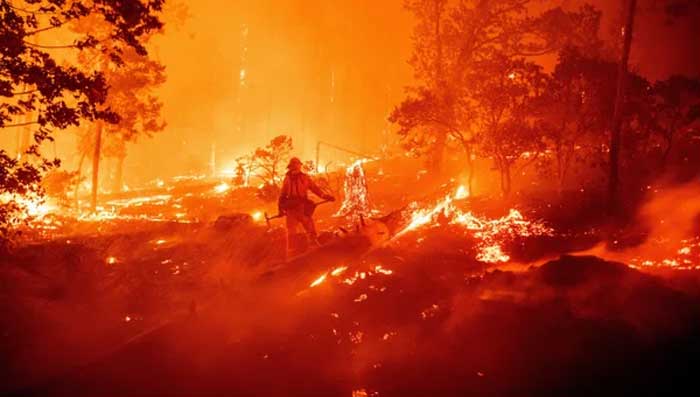
Hot, dry, and windy conditions that fuel wildfires are becoming far more common worldwide, with scientists reporting a dramatic rise in what they call synchronous fire weather (SFW). Over the past four and a half decades, the annual number of such high-risk days has nearly tripled, a shift largely attributed to climate change.
Research published in Science Advances shows that between 1979 and the mid-1990s, global synchronous fire weather occurred on average about 22 days per year. By 2023 and 2024, that number had climbed to more than 60 days annually — a striking increase with serious implications for wildfire management.
“These kinds of changes increase the likelihood that fires in many regions will be extremely difficult to control,” said study co-author John Abatzoglou, a fire scientist at the University of California, Merced.
Synchronous fire weather refers to periods marked by exceptionally dry, warm, and windy conditions that make vegetation easier to ignite and allow fires to spread rapidly. Beyond raising the probability of large wildfires, these conditions strain firefighting systems by creating simultaneous demand for suppression resources across multiple regions and worsening air quality.
Experts say the trend is alarming. Fire scientist Mike Flannigan of Thompson Rivers University, who was not involved in the study, noted that SFW events are a major driver of wildfire impacts. As more regions face extreme conditions at the same time, countries may find it harder to share personnel and equipment. As Abatzoglou cautioned, “that’s where things begin to break.”
Past events illustrate the challenge. During the 2021 heat dome that affected both the United States and Canada, firefighting resources were stretched thin as extreme fire conditions occurred concurrently. In Europe, Portugal and Spain have also experienced rising overlap in extreme fire weather, increasing by roughly three days per decade and complicating cross-border coordination.
Using computer modelling, researchers concluded that more than 60% of the global rise in synchronous fire weather days can be linked to fossil-fuel-driven climate change. The surge is particularly stark in some regions. In the continental United States, SFW days rose from an average of 7.7 per year in the early study period to about 38 days annually over the last decade. South America has seen an even sharper escalation, jumping from roughly 5.5 days per year to more than 70 days annually, with 2023 recording an extraordinary 118 such days.
Notably, south-east Asia stands out as the only region where synchronous fire weather days are declining, a change researchers attribute to increasing humidity rather than drying trends.
Scientists warn that the growing frequency of these dangerous weather patterns could reshape how nations prepare for and respond to wildfires in the years ahead.
Comments are closed.