
Trump Tariffs Live: Trump Raises Global Tariff to 15% Day After Supreme Court Ruling

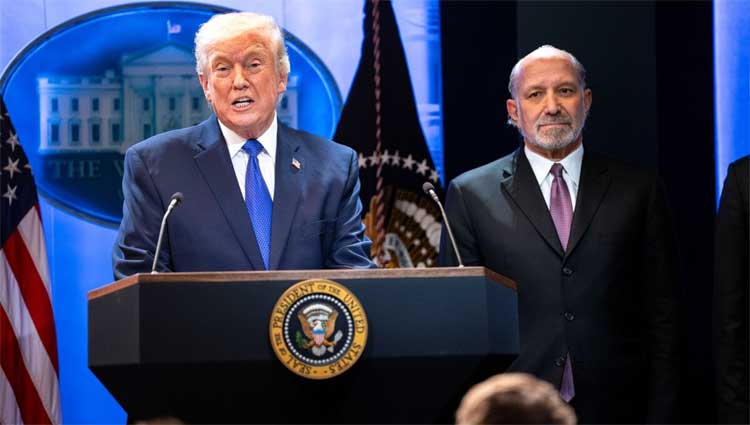
After the US Supreme Court on Friday struck down President Donald Trump’s sweeping global tariffs, reactions have come in from multiple countries and economic experts. Trump has said he was “absolutely ashamed” of judges who ruled 6-3 against him, calling them “disloyal to our Constitution” and “lapdogs.”
After the ruling, Trump signed an executive order on Friday to impose a 10% worldwide tariff on foreign goods. He signed the order in the Oval Office and later wrote on social media that it was “effective almost immediately”.
US Supreme Court ruling on Trump tariff | Key points
-Chief Justice John Roberts wrote the majority opinion in the Supreme Court ruling, saying the president had gone beyond his legal powers. Roberts said that any “extraordinary assertion” of such authority requires “clear congressional authorisation”, which Trump did not have. The ruling ends the administration’s use of a law that has historically been meant for freezing assets or placing sanctions on adversaries, rather than for wide trade taxes.
-Trump had used a 1977 law, the International Emergency Economic Powers Act (IEEPA), to impose taxes on imported goods from nearly all trading partners without seeking the US Congress’s approval. This covered allies from Canada to India, the latter facing a 50% tariff rate until recently, before a trade agreement reduced it to 25% for now and to 18% soon. The US Constitution clearly gives Congress, not the president, the authority to impose taxes and tariffs.
-Trump, hours after the SC ruling, signed an executive order on Friday imposing a 10% global tariff on foreign goods, acting quickly to keep his trade plans in place after the US Supreme Court struck down many of the levies he had introduced last year.
-The above-mentioned tariff is due to take effect on February 24 at 12:01am Washington time, according to a fact sheet issued by the White House.
-Trump’s treasury secretary, Scott Bessent, said the new 10% duties and possible higher tariffs under the Section 301 unfair practices law and the Section 232 national security law would lead to almost no change in tariff revenue in 2026.
Comments are closed.