
Iran, US Reach Understanding on ‘Guiding Principles’ in Geneva Nuclear Talks; Deal Still Distant

Iran and the United States said they had reached a preliminary understanding on key “guiding principles” during talks on Tuesday aimed at addressing their long-running nuclear dispute, though Tehran cautioned that a final agreement remains distant.
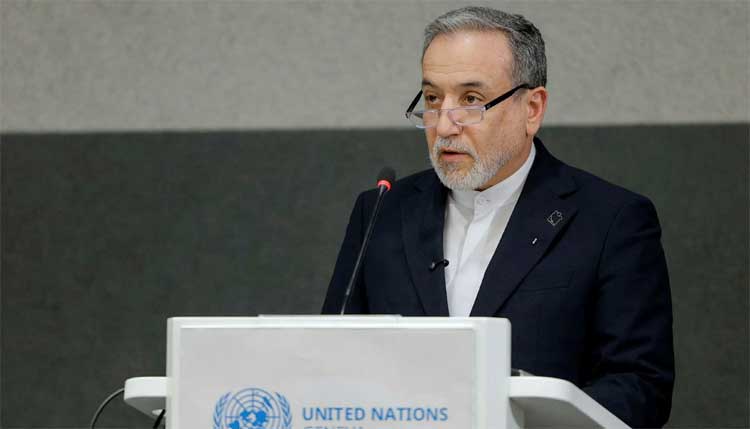
Speaking after the Geneva discussions, Iranian Foreign Minister Abbas Araghchi said the two sides had exchanged and debated multiple proposals. “Different ideas have been presented and seriously discussed, and we have been able to reach a general agreement on some guiding principles,” he told Iranian media, stressing that this did not signal an imminent deal.
Oil markets reacted swiftly to the remarks, with Brent crude falling more than 1 percent as concerns over a potential regional escalation eased. The talks took place amid heightened tensions in the Middle East, where Washington has increased its military presence.
The negotiations were conducted indirectly, with the Oman acting as mediator. Muscat’s Foreign Minister Badr Al-Busaidi said that while “much work remains,” both sides departed with “clear next steps,” suggesting that dialogue would continue.
As discussions got underway, Iranian state media reported that Tehran had temporarily restricted parts of the Strait of Hormuz, citing security precautions during military drills by the Revolutionary Guards. The strategic waterway is a critical artery for global oil shipments, and any disruption there typically rattles energy markets.
Iran’s Supreme Leader Ayatollah Ali Khamenei, responding to recent comments by Donald Trump about possible regime change, warned that attempts to destabilise Iran would fail. In remarks carried by Iranian outlets, he asserted that even the world’s strongest militaries could face setbacks.
Addressing a disarmament conference in Geneva, Araghchi described the talks as opening a “new window of opportunity” and expressed hope for a sustainable resolution that would recognise what he called Iran’s legitimate rights. Trump, meanwhile, said he would be involved “indirectly” and maintained that Tehran was motivated to reach an agreement.
The nuclear issue remains deeply contentious. The United States and Israel argue that Iran’s nuclear activities could pave the way for weapons development, while Iran insists its programme is exclusively peaceful. Although Tehran has enriched uranium to levels beyond typical civilian requirements, it denies pursuing atomic arms.
Iran reiterated that it would only negotiate limitations on its nuclear programme in exchange for sanctions relief, rejecting discussions on its missile capabilities. Khamenei underscored that Iran’s missile arsenal was non-negotiable.
Analysts say the path to any agreement will depend on whether both sides can bridge longstanding gaps over enrichment limits, verification measures, and the lifting of economic sanctions that have weighed heavily on Iran’s economy.
Comments are closed.