
Indonesia Landslide Death Toll Rises to 74; Search Enters Recovery Phase

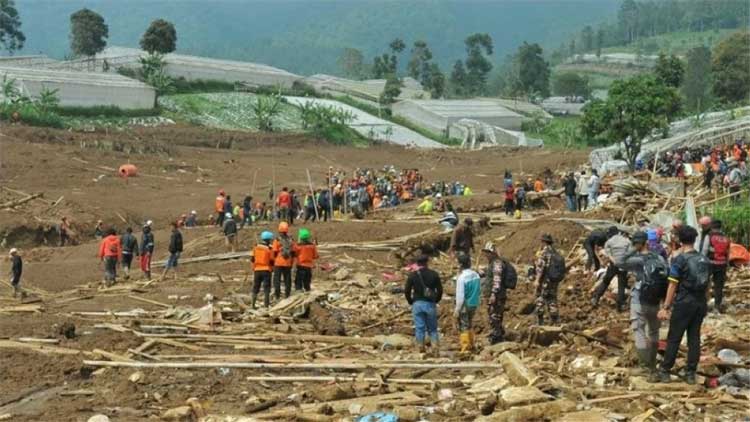
The death toll from a devastating landslide in Indonesia has risen to 74, authorities said on Friday, nearly two weeks after rescue operations began.
The landslide was triggered by heavy rainfall on January 24 and struck a mountain village in Java’s West Bandung region, burying dozens of homes and forcing hundreds of residents to flee.
Thousands of rescuers, including police, military personnel, and volunteers, have been working around the clock, digging through thick mud and debris using both manual tools and heavy machinery. The local search and rescue agency confirmed that 74 victims have now been identified.
“There are still several residents on the missing persons list who have not yet been found,” said agency head Ade Dian Permana, without specifying the number.
He added that adverse weather conditions continue to hamper operations. “Thick fog and persistent rain are limiting visibility and affecting ground stability in the search area,” Ade said.
According to officials, the operation has now entered the recovery phase, with adjustments being made to focus on retrieving bodies rather than rescuing survivors.
The Indonesian Navy said that 23 personnel who were undergoing training in the area were among those caught in the landslide in Pasirlangu village.
Local authorities reported that around 50 houses were damaged, while more than 160 people remain displaced.
The government has also highlighted the role of deforestation in worsening flooding and landslides. Forest loss was blamed for deadly disasters on Sumatra last year that killed about 1,200 people and displaced over 240,000 residents.
Forests play a crucial role in absorbing rainfall and stabilising soil through their root systems. Their removal makes regions more vulnerable to landslides and flooding.
Natural disasters of this kind are common across Indonesia’s vast archipelago during the rainy season, which typically runs from October to March.
Comments are closed.