
Polar Vortex Disruption Highlights Growing Climate Extremes Worldwide

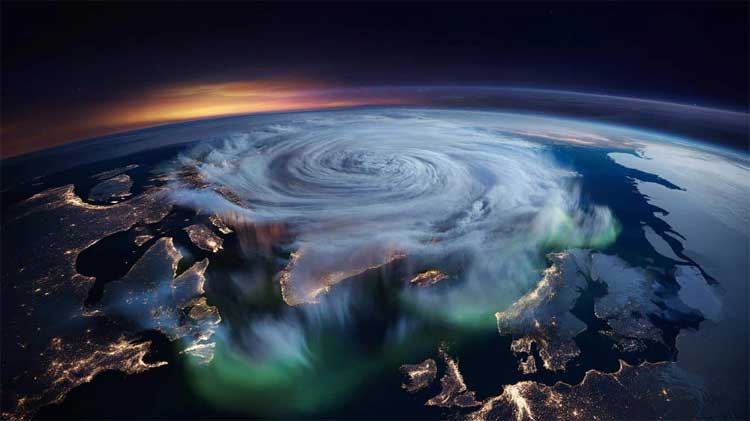
On a typical winter day, the mass of Arctic air currently gripping much of the United States would be confined thousands of miles farther north, hovering over the North Pole. Instead, it has plunged deep into North America, bringing unusually severe cold to large parts of the country.
Scientists say the displacement of this cold air, known as the polar vortex, reflects how climate change is increasingly disrupting global weather patterns.
The wandering polar vortex is just one example of extreme conditions unfolding worldwide. While parts of the United States are enduring bitter cold, Greenland and much of the Arctic have experienced an unusually mild winter.
“While cold conditions in the U.S. have made headlines, Greenland and the Arctic have quietly had a remarkably mild winter,” wrote Washington Post meteorologist Ben Noll.
At the same time, record-breaking heat is affecting other regions. Australia is struggling through an intense heat wave, with temperatures exceeding 120 degrees Fahrenheit (49 Celsius) in some areas, triggering wildfires and power outages. In central Africa, several countries have recorded temperatures above 101 degrees Fahrenheit, shattering previous records.
Scientists have long warned that climate change would produce more frequent and severe weather extremes — colder cold spells, hotter heat waves, and more intense storms.
“The extremes are going to be more extreme,” said Judson Jones, a meteorologist and reporter.
Why Extremes Are Intensifying
Rising global temperatures are making heat waves more intense, longer-lasting, and more widespread, said Jennifer Francis, a senior scientist at the Woodwell Climate Research Center.
Warmer air holds more moisture, making heat more dangerous by reducing the body’s ability to cool through sweating. The same process accelerates drought by increasing evaporation and drying out soils.
“The combination of heat and drought is a recipe for wildfires,” Francis said, noting that fires are becoming more frequent and destructive.
Increased atmospheric moisture is also fueling heavier rainfall and snowfall. When storms form, they now have more water to release, leading to more damaging floods and snowstorms.
Another winter storm moving in from the Atlantic is expected to hit the eastern United States this weekend, with some forecasts even suggesting rare snowfall in parts of Florida.
Understanding the Polar Vortex
The polar vortex is a vast ring of cold air that normally circulates over the Arctic during winter and has little impact on daily weather.
However, when the vortex weakens or becomes distorted, it can send frigid air southward.
“When it is disrupted — becoming weak, elongated, or split — it can intensify cold spells like the one currently affecting the eastern U.S.,” Francis explained.
One factor contributing to these disruptions is the rapid loss of Arctic sea ice. As ice melts, temperature differences between the Arctic and lower latitudes shrink, weakening the jet stream.
A weaker jet stream tends to swing more dramatically north and south, allowing Arctic air to spill into populated regions.
Because the Arctic is warming faster than the rest of the planet, scientists believe such disruptions may become more frequent in the future.
Human Impact of Extreme Weather
The effects of these weather shifts are far from theoretical.
The recent winter storm left more than 60 people dead nationwide, including several in New York City who died from exposure. Tens of thousands remained without power days later, while more than a foot of snow fell across 19 states.
Cities struggled to clear roads, forcing government offices and schools to close. In parts of Arkansas and Mississippi, impassable highways led to extended shutdowns and National Guard deployments.
With temperatures remaining low, snow and ice have persisted, creating widespread disruption.
The next storm, while expected to be less extensive, threatens to compound problems along the already strained East Coast.
Life on the Front Lines of Climate Research
Far from population centers, scientists are confronting climate change directly on Antarctica’s Thwaites Glacier.
After an eight-week voyage aboard the icebreaker Araon, researchers from Britain and South Korea established a remote drilling camp on the glacier. Their goal is to bore through nearly half a mile of ice to study how warm ocean water is melting the glacier from below.
The work is grueling. Strong winds, freezing temperatures, and heavy snowfall threaten equipment and limit outdoor activity. Researchers spend much of their time shoveling snow, maintaining tents, and collecting water for drilling operations.
After weeks in extreme conditions, their clothing is worn, faces windburned, and beards untrimmed — visible reminders of the demanding effort to better understand how rapidly the planet’s ice is changing.
A Warning Sign
From Arctic cold snaps to global heat waves and melting glaciers, scientists say these events are interconnected symptoms of a warming planet.
Together, they illustrate how climate change is reshaping weather systems, intensifying extremes, and placing growing strain on societies worldwide.
Comments are closed.