
Climate Change Is Reshaping Amazon and Andes Forests, Study Finds

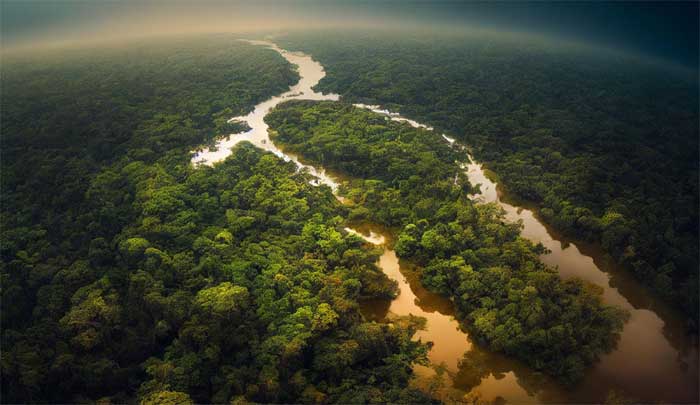
Climate change is quietly rearranging the forests of the Amazon and Andes, creating clear winners and losers, with the Northern Andes emerging as a potential lifeline for threatened tree species, according to a new study.
Published in Nature Ecology and Evolution, the research finds that tree diversity across tropical forests in South America has shifted markedly over recent decades due to global environmental change.
Led by Dr. Belen Fadrique of the University of Liverpool, the study draws on four decades of data collected from long-term forest plots monitored by hundreds of botanists and ecologists. The dataset offers one of the most detailed assessments yet of how some of the world’s most biodiverse forests are responding to a warming climate.
Stable overall picture masks regional losses
At a continental scale, overall tree species richness across South America has remained relatively stable. But this apparent balance conceals sharp regional contrasts.
While some regions recorded gains in species, large areas experienced significant declines, highlighting that climate change is not affecting tropical forests evenly.
Heat and rainfall shape forest outcomes
The study found that forests in hotter, drier and more seasonal environments were more likely to lose species over time. In contrast, healthier and more dynamic forest ecosystems often gained new species.
The steepest declines were recorded in the Central Andes, the Guyana Shield and the central eastern Amazon, where most monitoring plots showed falling tree diversity. In contrast, the Northern Andes and the western Amazon largely gained species.
Although rising temperatures had a broad impact across regions, rainfall levels and seasonal patterns played a crucial role in determining where forests gained or lost diversity.
Northern Andes identified as climate refuge
One of the study’s most significant findings is the identification of the Northern Andes as a potential climate “refuge” for tree species displaced from increasingly unsuitable lowland forests. As surrounding regions warm and dry, this area may offer safer conditions for survival.
The research spans much of the South American tropics, home to more than 20,000 tree species. Scientists analysed data from 406 long-term forest plots across ten countries, many of which have been repeatedly measured since the 1970s and 1980s.
Limited options for plants under climate stress
Plant species can respond to climate change by shifting their geographic ranges or adapting to new local conditions. When they are unable to do either, populations may decline, increasing extinction risks.
Call for urgent conservation
“Our work points to profound changes in forest composition and species richness at multiple scales,” said Dr. Fadrique, who conducted the research as a Marie Curie Fellow at the University of Leeds.
Flavia Costa, professor at Brazil’s Instituto Nacional de Pesquisas da Amazônia (INPA), said the findings highlight the need for region-specific monitoring and conservation efforts due to the uneven impacts of climate change.
Professor Oliver Phillips of the University of Leeds, who leads the pan-Amazon RAINFOR network, warned that deforestation compounds the threat. “It is especially critical to protect remaining forests where the Amazon meets the Andes,” he said. “Only if they stay standing can they offer a long-term home to species from surrounding lowlands.”
Comments are closed.