
Supreme Court to deliver verdict today on bail pleas of Umar Khalid, Sharjeel Imam

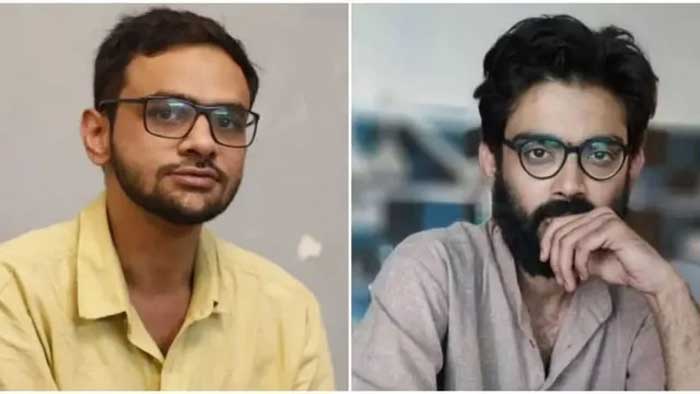
After spending more than five years in jail, student activists Umar Khalid and Sharjeel Imam will learn on Monday, January 5, whether they will be granted bail, as the Supreme Court is set to pronounce its verdict on their pleas along with those of five other accused in the alleged “larger conspiracy” case linked to the 2020 Delhi riots.
A bench of Justices Aravind Kumar and N.V. Anjaria had reserved its judgment on December 10 after hearing arguments from the accused and the Delhi Police, which has opposed their release by invoking the stringent Unlawful Activities (Prevention) Act (UAPA).
The case so far
Umar Khalid has been in custody since September 13, 2020, while Sharjeel Imam was arrested on January 28, 2020, weeks before the riots erupted. The accused have argued that the prosecution has adopted a tactic of arresting individuals sequentially to artificially extend the scope of the alleged conspiracy and delay the trial.
The Delhi riots broke out in February 2020 in parts of northeast Delhi following weeks of tension over protests against the Citizenship (Amendment) Act (CAA). The violence left 53 people dead, hundreds injured, and caused extensive damage to homes, shops and places of worship.
In the aftermath, Delhi Police described the violence as the outcome of a premeditated conspiracy linked to anti-CAA protests and arrested several activists, students and intellectuals under laws including the UAPA. Khalid and Imam were among those accused of playing key roles through speeches and organisational activities—allegations both have consistently denied.
One of the key pieces of evidence cited against Sharjeel Imam is a video in which he is allegedly heard speaking about blocking the “chicken neck” corridor to isolate Assam from the rest of India. Police have also relied on another clip in which Imam allegedly outlined plans to “paralyse Delhi” through a “chakka jam” disrupting essential supplies.
During the December 10 hearing, the Supreme Court repeatedly questioned the Delhi Police on whether Section 15 of the UAPA, which defines a “terrorist act”, could be applied to speeches and protest-related activities relied upon by the prosecution.
Besides Khalid and Imam, the bail pleas involve Gulfisha Fatima, Meeran Haider, Shifa ur Rehman, Mohd Saleem Khan and Shadab Ahmed, all accused of being part of a coordinated conspiracy that culminated in communal violence.
Arguing against Khalid’s bail, Additional Solicitor General S.V. Raju has referred to what he described as Khalid’s antecedents, including a controversial 2016 JNU protest, alleging that he raised the slogan “Bharat tere tukde tukde honge”. The prosecution has cited this in a supplementary charge sheet filed in November 2020.
The bail pleas arise from a September 2, 2025, order of the Delhi High Court, which denied bail to nine accused. A bench of Justices Navin Chawla and Shalinder Kaur (since retired) held that the material collected by investigators prima facie indicated a coordinated conspiracy, describing Khalid and Imam as the “intellectual architects” of the violence.
Counsel for the accused has countered that the prosecution relied on selectively extracted snippets from long speeches and WhatsApp chats to create prejudice.
Calls for the release of Khalid and Imam have also gained international attention. Newly appointed New York City Mayor Zohran Mamdani recently wrote to Khalid, saying he often reflected on Khalid’s words “on bitterness and the importance of not letting it consume oneself.” Khalid’s partner, Bunojyotsana Lahiri, shared the note publicly on social media after Mamdani was sworn in.
The Supreme Court’s verdict on Monday is expected to be closely watched, given its potential implications for bail jurisprudence under the UAPA.
Comments are closed.