
Ten Years After the Paris Agreement, COP30 Delivers Mixed Results

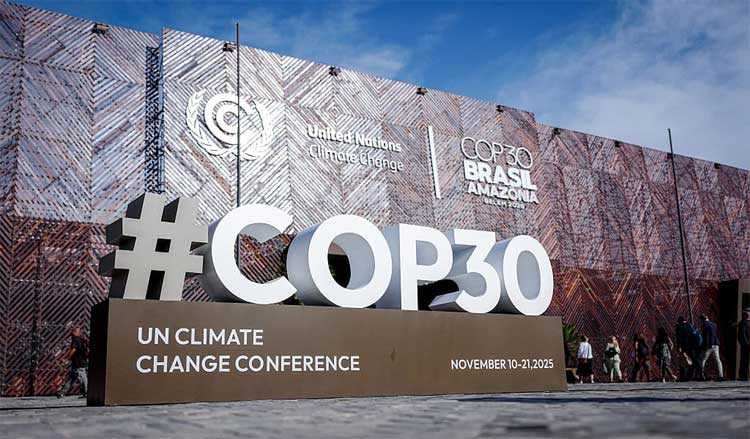
As the Paris Agreement marked its tenth anniversary this year, COP30 was meant to be more than a routine climate summit.
It was expected to signal a shift from promises to delivery—an “implementation COP” that would put concrete roadmaps in place to keep global warming within the 1.5°C limit. Held in Belém, deep in Brazil’s Amazon region, the conference carried unusually high expectations. In the end, however, it delivered mixed results that reflected both the limits of multilateral climate diplomacy and the growing force of people-led climate action.
COP30 stood out for several reasons. It took place in a democratic country, with Brazil deliberately choosing Belém to spotlight the Amazon’s central role in the climate crisis. Indigenous inclusion was framed as a priority by the Brazilian presidency, with President Luiz Inácio Lula da Silva setting two clear goals: agreement on a roadmap to transition away from fossil fuels and a plan to end deforestation.
The setting reinforced the urgency of those goals. Delegates endured intense heat, daily downpours, and even a fire inside the conference venue near the summit’s end. Yet despite these stark reminders, geopolitics and the constraints of consensus-based negotiations once again prevailed. After two weeks of talks, the final outcome—the so-called Mutirão Decision—failed to include any concrete implementation roadmaps or even a reference to fossil fuels.
Still, holding the negotiations together at a time when multilateralism is under strain has its own significance. COP30 exposed, once again, how slowly international climate politics move—but it also underscored how forcefully people are pushing for change.
Branded the “People’s COP,” COP30 saw some of the largest civil society mobilisations in recent years. Protests took place both outside and inside the venue, with demonstration areas located at the heart of the conference. Indigenous presence was highly visible, yet meaningful participation in negotiations remained limited. Improved transparency revealed that around 1,600 fossil fuel lobbyists had access to the Blue Zone, compared with just 360 Indigenous Brazilian representatives. Tensions escalated when Indigenous protesters breached the venue early in the conference, prompting a noticeable increase in security presence.
Despite these challenges, Indigenous activism had tangible impact. At the start of the second week, Brazil announced the creation of ten new protected Indigenous territories in the Amazon—one of the most concrete outcomes linked to public pressure during the summit.
COP30 also marked a shift in climate finance discussions. The focus expanded beyond mobilising funds to addressing how money can effectively reach those who need it most. In this context, International IDEA’s report Amazonian Climate Deliberation, developed with Delibera Brasil, drew attention for its recommendations on building a more equitable and functional climate finance system.
Brazil had framed COP30 as both a “COP of truth” and, following a recent International Court of Justice advisory opinion on climate obligations, potentially a “COP of justice.” Those hopes were largely unmet. The final decision made no reference to the ICJ opinion. Nonetheless, progress was made on combating climate disinformation through the Declaration of Information Integrity on Climate Change, now endorsed by 14 countries. The summit also saw the launch of the International Climate and Democracy Coalition, aimed at strengthening the link between democratic governance and effective climate action.
Among the conference’s concrete outcomes was a pledge to triple climate adaptation finance for Global South countries by 2035. The Mutirão Decision reaffirmed the role of Indigenous peoples and local communities and, for the first time, formally recognised Afro-descendant communities. Other advances included the establishment of a just transition mechanism, the Belém Gender Action Plan, the Global Ethical Stocktake, and the launch of a global Citizens’ Track, which will feed a citizens’ assembly into UN climate processes from 2026 onward.
Perhaps the most promising development occurred outside the official negotiations. Twenty-four countries launched the Belém Declaration on the Transition Away From Fossil Fuels, committing to a phase-out roadmap and announcing an international conference on the issue in April 2026. Though the initiative failed within the formal COP process, it may generate momentum and pressure ahead of COP31, set to be held in Türkiye under a joint presidency with Australia.
Ultimately, COP30 fell short of the ambition it set for itself, narrowing the Paris Agreement implementation gap only marginally. Conflicting interests—central to the climate crisis itself—once again dominated negotiations. Brazil’s credibility was also questioned following Lula’s decision to grant new oil exploration licences in the Amazon delta shortly before the summit.
Yet despite its shortcomings, COP30 left behind an important legacy. It demonstrated that even when international negotiations stall, climate action continues to be driven from the ground up. Whether that momentum can be sustained as the conference moves to more restrictive civic environments next year remains an open—and crucial—question.
Comments are closed.