
Austrian Alps Warming Nearly Twice as Fast as Global Average, Threatening Glaciers and Winter Tourism

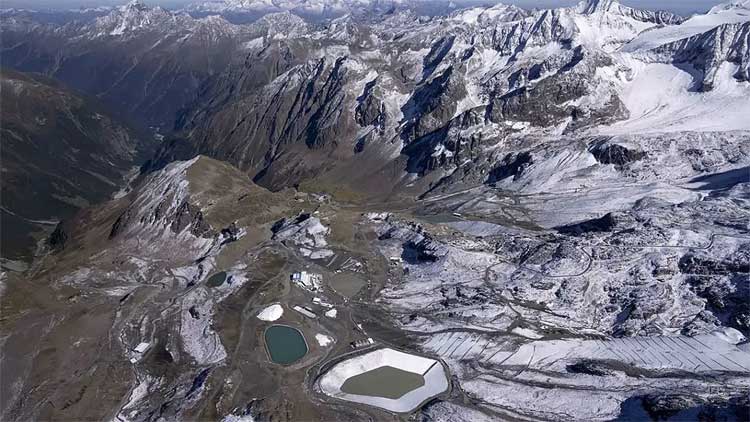
The Austrian Alps are warming at almost twice the global average, accelerating glacier retreat and forcing ski resorts to rely increasingly on artificial snow, according to officials and recent field data.
A pillar of Europe’s winter tourism industry, the Alps are experiencing shorter and less predictable snow seasons, reduced snowfall at lower elevations, and growing water shortages that are disrupting ski operations and mountain huts.
Climate change is widely regarded by scientists as one of the greatest threats facing humanity, and its effects are becoming increasingly visible across alpine regions.
A recent Anadolu report in the series “Europe’s Peak: The Alps” highlights the mounting impact of rising temperatures on tourism and ecosystems. Long-term monitoring data show extensive glacier loss and shifting precipitation patterns across Austria’s mountain ranges.
Despite these challenges, winter tourism demand remains strong. According to the Austrian National Tourist Office (Österreich Werbung), more than 20 million visitors plan to spend their winter holidays in Austria this season.
However, retreating glaciers are already reshaping alpine water systems, hiking routes, and the operation of mountain huts. The Austrian Alpine Club (Alpenverein Österreich), which has monitored glaciers for more than a century through a network of thousands of volunteers covering 26,000 kilometres of trails and over 200 climbing areas, reports severe and ongoing ice loss.
Measurements from the 2023–2024 period show that Austrian glaciers retreated by an average of 24.1 metres (79 feet)—the third-largest annual loss on record.
Rising temperatures have also triggered water shortages at high altitudes, forcing the closure of some mountain huts and major infrastructure upgrades at others. Mountaineering conditions have deteriorated as melting ice destabilises terrain, increasing the risk of mudslides and rockfalls in areas once secured by glaciers.
Warming is also altering precipitation patterns, with more winter rain replacing snowfall and more intense storms and droughts occurring during summer months.
Speaking to Anadolu, Anna Praxmarer of the Alpenverein warned of growing ecological consequences. “Animals like alpine hares or rock ptarmigans change to white plumage or fur for snow camouflage, but without snow cover, they become easy prey. This is just one of many visible impacts,” she said, also noting flooded trails and severe water scarcity at mountain huts.
In a stark assessment of the future, Praxmarer added: “The climate crisis is striking the Alps with full force. It is now nearly inevitable that Austria’s glaciers will largely disappear within the next 40 to 50 years.”
Comments are closed.