
Delhi Chokes Under Severe Smog as AQI Stays in ‘Severe’ Category, Flights Affected

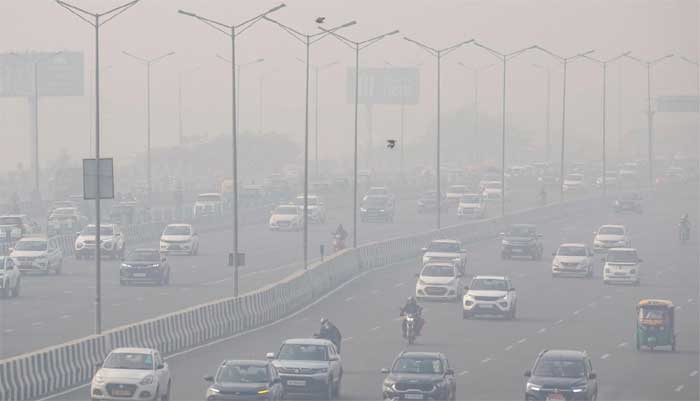
Delhi woke up to a thick blanket of smog on Monday, with air quality remaining firmly in the ‘severe’ category across the national capital. The overall Air Quality Index (AQI) stood at 457 at 6 am, according to the Air Quality Early Warning System for Delhi, as visibility dropped sharply in several areas.
Flight operations were impacted, with both the Delhi airport and airlines issuing advisories warning passengers of possible delays.
Visuals from across the city showed dense haze severely restricting visibility. At Indira Gandhi International (IGI) Airport, visibility plunged to as low as 50 metres around 7 am, according to the India Meteorological Department (IMD).
The IMD had issued a dense fog warning for the morning and forenoon hours. The maximum temperature in Delhi was recorded at 23°C, while the minimum settled at 8°C.
Low visibility across the city
Videos shared by ANI showed a thick layer of smog engulfing multiple parts of the capital. Barakhamba Road recorded an AQI of 474, while Akshardham registered 493, both in the ‘severe’ category. Dwarka Sector-14 also reported poor conditions, with an AQI of 469, according to data from the Central Pollution Control Board (CPCB).
Under CPCB norms, AQI levels between 401 and 500 are classified as ‘severe’, while 450 and above fall under ‘severe plus’ for mitigation measures.
Airport, airlines issue advisories
The Delhi Airport, in an advisory posted on X, said flight operations could face disruptions due to dense fog. Passengers were advised to check with their respective airlines for the latest updates.
Budget carrier IndiGo also warned of delays, citing low visibility. The airline urged travellers to stay updated on flight status via its website or app and to allow extra time to reach the airport as road traffic slowed due to the haze.
Several stations hit maximum AQI
Air quality worsened over the weekend, with at least three monitoring stations — Wazirpur, Rohini and Ashok Vihar — recording the maximum AQI of 500 on Sunday. Since the AQI scale does not go beyond 500, actual pollution levels may have been even higher.
Data showed that 38 of 39 active monitoring stations in Delhi reported air quality in the ‘severe’ or ‘severe-plus’ categories at various times on Sunday. Areas such as Jahangirpuri and Mundka recorded AQI levels of 499, followed by Bawana (498) and Delhi Technical University (497).
Even the city’s best-performing station, Shadipur, remained in the ‘very poor’ category with an AQI of 375, highlighting the extent of the pollution crisis gripping the capital.
Comments are closed.