
US Vaccine Panel Moves to End Universal Hepatitis B Birth Dose, Sparking Fierce Backlash

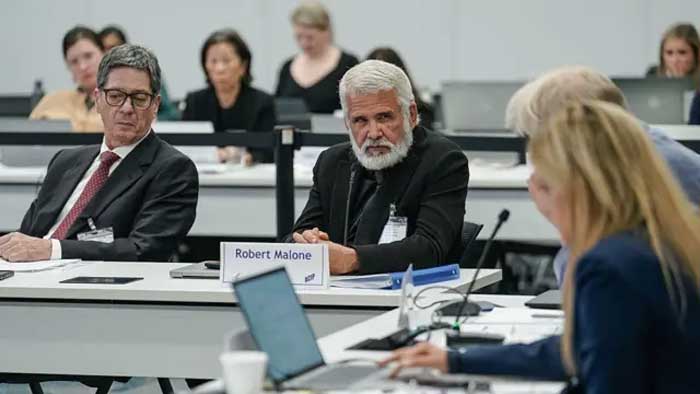
A federal vaccine advisory committee on Friday voted to end the decades-old recommendation that all U.S. newborns receive a hepatitis B vaccine dose at birth, triggering intense criticism from medical and public health experts.
The committee — whose members were all appointed by Health Secretary Robert F. Kennedy Jr., a longtime anti-vaccine activist before joining the administration — voted 8–3 to recommend the birth dose only for babies whose mothers test positive for hepatitis B or were not tested during pregnancy. For all other infants, vaccination would become a parent-doctor decision, with the series beginning at 2 months if families choose to delay.
President Donald Trump praised the vote as a “very good decision.”
Health community pushes back
Major medical societies, state health departments, and insurers said they would continue recommending and covering the birth dose, long considered a major public-health success that prevented thousands of infections.
“This is the group that can’t shoot straight,” said Dr. William Schaffner, a veteran vaccine expert at Vanderbilt University who has worked with ACIP for decades.
Experts warned the decision marks a return to a strategy abandoned more than 30 years ago, when universal birth-dose vaccination dramatically reduced childhood hepatitis B infections.
Committee members argued that the infection risk for most babies is low and that earlier safety studies in newborns were limited. But several members and outside experts countered that no evidence shows harm, and delaying the dose could leave infants vulnerable.
“This is unconscionable,” said committee member Dr. Joseph Hibbeln, who opposed the proposal.
Critics say the panel has shifted away from science
Public health observers expressed alarm over how the meeting was conducted. CDC scientists no longer presented vaccine data; instead, figures well-known in anti-vaccine circles were given prominent roles. The committee last year was entirely fired and replaced by Kennedy with several members holding anti-vaccine views.
“This is no longer a legitimate scientific body,” said Elizabeth Jacobs of Defend Public Health, calling the proceedings “an epidemiological crime scene.”
Republican Sen. Bill Cassidy, a physician and chair of the Senate health committee, called the vote “a mistake,” warning “this makes America sicker.”
The committee also advanced another controversial proposal urging parents to discuss post-vaccination antibody testing for children — a practice experts said has no scientific basis and could create confusion.
CDC acting director to decide next steps
Because the CDC currently lacks a permanent director, acting chief Jim O’Neill will decide whether to accept the recommendations. Historically, CDC leaders almost always adopted the committee’s guidance, which shapes national vaccination programs.
Hepatitis B can cause lifelong liver disease, cancer, and death. Since 1991, universal birth-dose vaccination has been credited with a sharp drop in childhood cases.
Kennedy’s redesigned committee argued for re-examining those policies, claiming pressure from unnamed “stakeholder groups.” But many experts view the shift as ideologically driven rather than evidence-based.
Dr. Peter Hotez declined an invitation to participate, saying ACIP had “shifted its mission away from science and evidence-based medicine.”
Comments are closed.