
Over 300 IndiGo Flights Cancelled as New Crew Rostering Rules Trigger Nationwide Disruptions

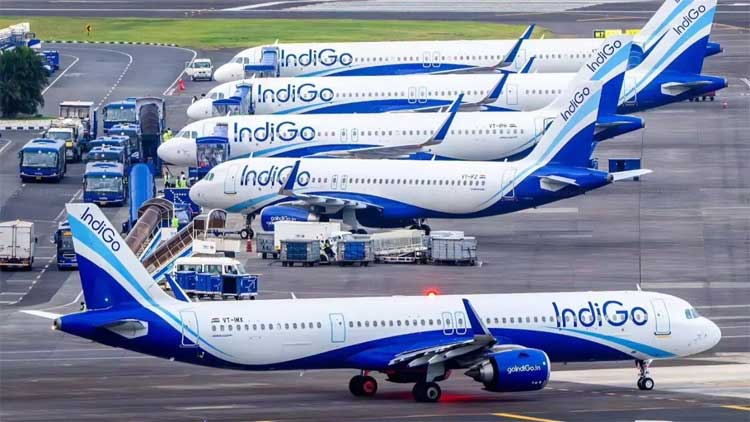
More than 300 IndiGo flights were cancelled on Thursday as operational chaos continued at major airports across India, with the airline struggling to adapt to newly enforced crew rostering regulations. This came a day after at least 150 cancellations on Wednesday, when IndiGo announced “calibrated adjustments” to its schedules for the next 48 hours.
IndiGo’s on-time performance (OTP) plunged to 19.7% on Wednesday, down from 35% a day earlier, according to civil aviation ministry data.
According to an official familiar with the situation, Thursday saw 33 cancellations in Delhi, 68 in Hyderabad, 85 in Mumbai, and 73 in Bengaluru. On Wednesday, Delhi alone saw 67 cancellations (37 departures and 30 arrivals), followed by 42 in Bengaluru, 40 in Hyderabad, and 33 in Mumbai.
In a statement on Wednesday, IndiGo said the temporary schedule adjustments would help stabilise operations and gradually restore punctuality. “Our teams are working around the clock to ease customer discomfort and ensure operations stabilize as quickly as possible,” the airline said, adding that affected passengers were being offered alternate flights or refunds as applicable.
The airline did not issue a fresh update on Thursday.
The disruption stems from a combination of factors: technology glitches, adverse weather, airport congestion, and the rollout of updated Flight Duty Time Limitations (FDTL) that took effect in November. An emergency Airbus A320 software patch installed on November 29–30 further destabilised crew scheduling at a time when IndiGo already had little buffer due to the new rules.
DGCA data shows IndiGo had been under pressure even before this week’s turmoil, cancelling 1,232 flights in November—755 of them due to FDTL—while its OTP dropped to 67.7% from 84.1% in October.
Baggage system failures at Delhi’s Terminal 1 and Terminal 3 on Wednesday added to passenger woes, with many missing onward connections as flights were axed while they were still checking in.
The revised FDTL norms—implemented in phases on July 1 and November 1—aim to combat crew fatigue by mandating longer weekly rest periods of 48 hours, extending designated night hours, and reducing the number of permitted night landings from six to two.
On Wednesday, the DGCA said it had summoned IndiGo to explain the circumstances behind the widespread cancellations and outline steps to mitigate delays.
IndiGo currently operates 2,200–2,300 flights daily across over 90 domestic and 45 international destinations. As of December 2, its fleet stood at 416 aircraft, with 366 in active service and 50 grounded, according to Planespotters.net.
The Airline Pilots Association of India, representing over 800 pilots, criticised what it called a “failure of proactive resource planning” by major carriers. IndiGo’s OTP of 35% on Tuesday was the lowest among Indian airlines and a sharp fall from its usual 80%+ performance.
Aviation analyst Ameya Joshi noted that IndiGo’s large network, especially its extensive night-time operations, makes it particularly vulnerable under the tightened rest requirements.
Comments are closed.