
Deadly Floods in South and Southeast Asia Highlight Climate Risks, Cause $20 Billion in Losses

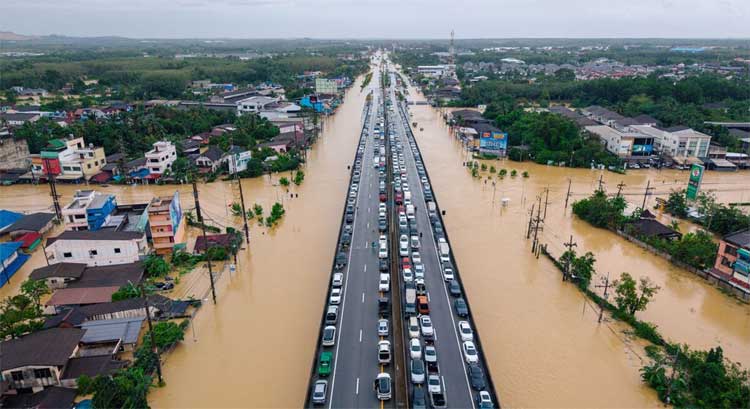
Devastating floods across parts of South and Southeast Asia have claimed more than 1,300 lives and caused at least $20 billion in losses since late last month, underscoring the growing threats from climate change and extreme weather to the region’s densely populated and rapidly growing economies.
A series of three tropical cyclones coinciding with the regular northeast monsoon brought unprecedented rainfall in some areas, causing widespread destruction from Sri Lanka to Indonesia. Homes, roads, and railways were damaged, crops destroyed, factories disrupted, and tourist destinations inundated.
Experts point to climate change as a key factor aggravating the flooding, along with deforestation, inadequate flood defenses, and underfunded disaster preparedness.
“Climate change is undeniably fueling more severe flooding in Southeast Asia,” said Davide Faranda, research director in climate physics at France’s National Center for Scientific Research, who led a study on Vietnam’s November floods.
Research firm BMI, a Fitch Solutions unit, warns that “compound disasters”—multiple extreme events in quick succession—are likely to become more frequent, causing greater damage. The region also has high exposure to flood risk, with 21% of Malaysia’s population, roughly 20% of Indonesia’s, and about 15% of Singapore, Vietnam, the Philippines, and Sri Lanka living in flood-prone areas. These figures have risen since the mid-2010s and are expected to climb as populations grow and global warming accelerates.
Countries like the Philippines, Myanmar, and Vietnam rank among the most climate-vulnerable globally, according to Germanwatch, an independent human rights organization. Despite these risks, climate resilience efforts have lagged, partly due to rapid economic growth taking precedence over planning and adaptation, according to Helen Nguyen, an environmental engineering professor at the University of Illinois Urbana-Champaign.
The Philippines faces acute challenges, with public anger over a multibillion-dollar corruption scandal linked to flood mitigation projects halting infrastructure work, denting investor confidence, and pushing economic growth to a four-year low.
While industrial output so far has been minimally affected, the full economic impact is yet to be assessed. The $20 billion figure is based on preliminary government and analyst estimates and could rise. Last year, seasonal floods across Asia-Pacific caused around $25 billion in losses, according to insurance broker Aon Plc.
“The region’s main commercial and industrial centers appear largely unscathed,” analysts at Capital Economics noted, comparing the damage to the 2011 Thailand floods that hit industrial hubs near Bangkok and caused a double-digit GDP drop. Supply chain disruptions are expected to be short-term, though crop losses could push food prices higher.
Recovery and disaster response will weigh heavily on government budgets in Thailand, Indonesia, and Sri Lanka, which is still recovering from a 2022 default. Frederic Neumann, chief Asia economist at HSBC, emphasized the growing fiscal burden:
“More and more fiscal outlays need to be diverted to harden infrastructure and build up resilience. Especially for poorer economies, this can entail difficult choices that require reductions in badly needed expenditures elsewhere.”
Cyclone-specific impacts
-
Sri Lanka: Cyclone Ditwah has killed at least 465 people, with estimated damages of 500 billion rupees ($1.6 billion), equivalent to roughly 1% of GDP.
-
Thailand: Cyclone Senyar caused some of the worst flooding on record, disrupting technology and tourism hubs, with damages exceeding $15 billion. Additional losses could reach $400 million per month if conditions persist. Tourist arrivals are expected to be severely affected.
-
Indonesia: At least 700 deaths were reported due to flooding and landslides in Sumatra, impacting coal, coffee, and palm oil production. Estimated economic losses exceed $4 billion (0.29% of GDP), covering infrastructure damage and lost household and agricultural income.
-
Vietnam: Storms caused around $3.2 billion in losses this year, close to the record $3.5 billion in 2024 from Super Typhoon Yagi, affecting manufacturing, delivery timelines, and inflation.
Even before the November storms, Thailand and Indonesia had deployed significant stimulus packages to spur growth, heightening fiscal pressures. The recent floods add further strain on countries trying to balance recovery, infrastructure resilience, and economic stability.
The floods highlight the urgent need for Southeast Asia to strengthen climate adaptation, improve flood defenses, and build long-term resilience as extreme weather events become more frequent and severe.
Comments are closed.