
Judge Blocks Trump’s Order Requiring Proof of Citizenship for Voter Registration

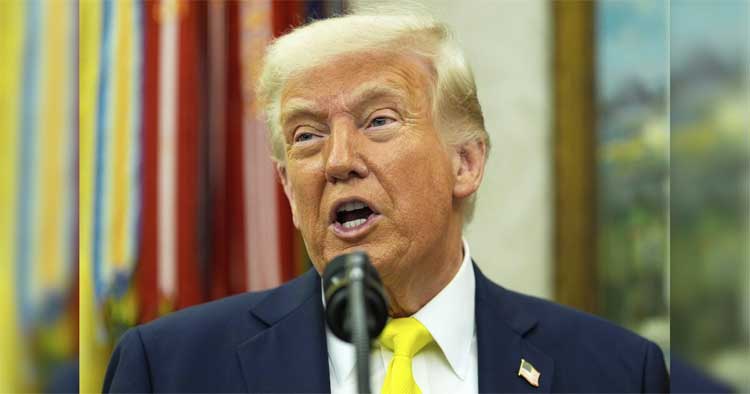
A federal judge on Friday struck down President Donald Trump’s attempt to require documentary proof of citizenship on the federal voter registration form, ruling that the administration exceeded its constitutional authority.
US District Judge Colleen Kollar-Kotelly in Washington, D.C., sided with Democratic and civil rights groups who argued that Trump’s executive order to overhaul election rules violated the separation of powers. The judge ruled that neither the presidency nor federal agencies have the authority to impose such a mandate without Congress.
“Because our Constitution assigns responsibility for election regulation to the States and to Congress, the President lacks the authority to direct such changes,” Kollar-Kotelly wrote, noting that the Constitution grants the president “no direct role” in setting voter qualifications or federal election procedures.
The ruling grants partial summary judgment to the plaintiffs and permanently blocks the US Election Assistance Commission from adding the proof-of-citizenship requirement to the federal voter form.
Civil rights groups celebrated the decision. Sophia Lin Lakin of the ACLU called it “a clear victory for our democracy,” accusing Trump of attempting an “unconstitutional power grab.”
The White House rejected the ruling. Spokesperson Abigail Jackson said Trump was acting within his authority “to ensure only American citizens are casting ballots,” calling the measure “commonsense” and predicting success on appeal.
Republicans have made proof-of-citizenship laws a priority, but efforts at both federal and state levels have repeatedly stalled or been overturned. Similar requirements have caused widespread confusion for voters, including in Kansas, where more than 30,000 eligible residents were blocked from registering before the law was struck down.
Studies continue to show that noncitizen voting is rare.
The lawsuit will proceed on other parts of Trump’s election order, including a provision requiring all mail ballots to be received—not just postmarked—by Election Day. Multiple related legal challenges are still pending, including suits filed by 19 state attorneys general and separate cases from Washington and Oregon.
Comments are closed.