
COP30: Between Paris Promises and Baku’s Billions, Belem Faces the Next Big Climate Test

Each UN climate summit (COP) brings a central theme to the table. At COP28 in Dubai in 2023, it was the heated debate over fossil fuels. After marathon negotiations, delegates from all UN member states agreed to “reduce” — rather than “phase out” — the use of oil and coal.
The following year in Baku, Azerbaijan, COP29 focused on climate finance. It concluded with a promise to deliver $300 billion per year by 2035 to help countries in the Global South confront climate change.
Now, as the world turns to Belem, Brazil, for COP30, there is no single unifying issue. “No major topic is likely to dominate this year. On the contrary, a wide range of very different subjects will be on the agenda,” says Gaïa Febvre, head of international policy at the Climate Action Network.
Taking Stock, 10 Years After the Paris Agreement
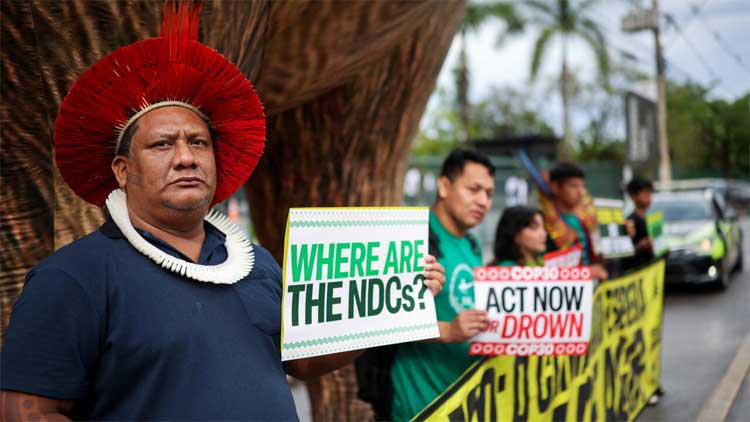
COP30 also marks a decade since the landmark Paris Agreement of 2015, under which every country pledged to submit updated climate plans — known as Nationally Determined Contributions (NDCs) — every five years.
But progress is lagging. Many nations missed the September deadline to submit their new NDCs. The European Union remains deeply divided and is not expected to file its plan until just days before the summit.
Among those that did submit on time, only Norway and the United Kingdom have plans aligned with the Paris temperature goals. China’s roadmap, by contrast, fell far short, targeting only a 7–10% emissions cut by 2035.
“We are under no illusions,” says Febvre. “When these NDCs are reviewed, COP30 will conclude that we are not in line with the Paris Agreement. The real challenge in Belem will be how countries respond to this gap in ambition.”
Still, Febvre notes that progress has been made. “Before Paris, the world was on track for +4°C of warming. Now we’re closer to +2.6°–+2.8°C. But that’s still not enough to keep our planet habitable.”
From Baku to Belem: The Finance Question Returns
Funding for developing nations will once again take centre stage. “COP30 will also be a COP on finance, continuing the work begun in Baku,” says Lorelei Limousin, a climate campaigner at Greenpeace.
Despite last year’s pledge of $300 billion a year, critics called the plan inadequate and vague. “We still don’t know who will fund what — whether it will be public or private money, or how it will be divided between mitigation, adaptation, and loss and damage,” Limousin notes.
Advocates are now pushing for a “From Baku to Belem” roadmap to scale up climate finance to at least $1.3 trillion annually by 2035. Ideas under discussion include solidarity taxes on financial transactions, fossil fuel emissions, or airline tickets.
However, Limousin cautions: “Private finance alone cannot save the climate — it seeks profit, not justice. By taxing fossil fuel industry profits, we could raise €400 billion a year for the Global South. It’s time for COP30 to send a clear message: those responsible for the damage must help pay for it.”
Spotlight on the Forests
Belem — the gateway to the Amazon — offers Brazil’s President Luiz Inacio Lula da Silva a stage to highlight forest conservation. Lula plans to launch a Tropical Forests Forever Facility, aiming to raise $125 billion for long-term investment returns distributed to countries with major tropical forests — in the Amazon, the Congo Basin, and Southeast Asia.
Brazil, China, and the UAE have each pledged $1 billion to the fund. But concerns remain about safeguards. “We need guarantees that money won’t be reinvested in mining or agribusiness projects that drive deforestation,” warns Clément Helary, Greenpeace’s forest campaigner.
Despite past pledges — like the 2014 New York Declaration on Forests and the COP26 Glasgow commitment to end deforestation by 2030 — forest loss continues. In 2024, 8.1 million hectares of forest were lost, including 6.7 million hectares of primary tropical forest, according to Climate Focus.
Toward a “COP of the People”
After three successive summits in authoritarian countries — Egypt, the UAE, and Azerbaijan — activists want Belem to mark a democratic turning point.
“This must be a COP of the people,” says Fanny Petitbon of 350.org. “Belem should be a space where the public reclaims its right to speak — especially indigenous peoples, women, and vulnerable communities.”
A People’s Summit will run from November 12–16, including a mass climate march on November 15. The coalition “The Answer Is Us”, representing indigenous groups across Latin America, is pushing for inclusion in official negotiating spaces.
“They don’t want a COP for indigenous peoples,” Petitbon says. “They want a COP with them.”
Comments are closed.