
Delhi’s AQI Surges Past 500 on Diwali While Toronto Records Clean Air at 2

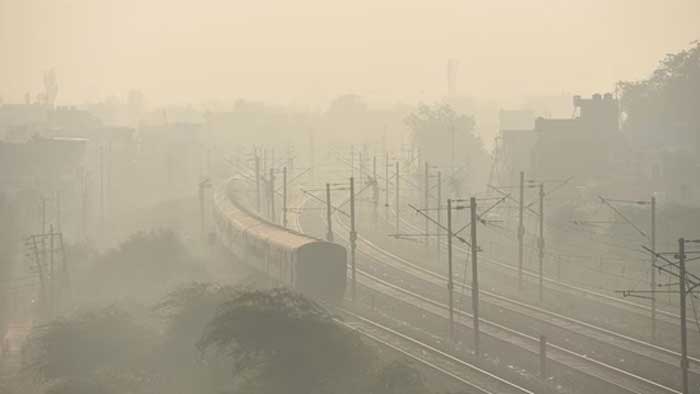
A heated debate over air pollution erupted on social media after Germany-based content creator Dhruv Rathee addressed criticism about his stance against bursting firecrackers on Diwali. Rathee, posting in Hindi, said he was unaffected by trolls because he was breathing comfortably in a city with an Air Quality Index (AQI) between 10 and 20.
“The number of firecrackers you burst has not affected me in the least,” Rathee said. “My advice to not burst firecrackers was for your benefit.”
Delhi vs Toronto
In response, Canada-based X user Raj Karnie highlighted the stark contrast in air quality between Delhi and Toronto. On the night of Diwali (October 20) and the following morning, parts of Delhi recorded AQI levels above 500, which is ten times higher than the World Health Organization’s recommended safe limit, according to The Guardian.
Meanwhile, East York in Toronto registered an AQI of just 2, reflecting nearly pristine air conditions. Karnie shared screenshots comparing Delhi’s night-time AQI to Toronto’s daytime reading, emphasizing the severity of pollution in India’s capital.
Other users joined the conversation, posting AQI data from Europe. On October 21, the Netherlands reported an AQI of 20, while Norway’s reading was 36, further highlighting the stark difference in air quality between Delhi and other global cities.
Understanding AQI
The Air Quality Index (AQI) is a standard measure of air pollution, reflecting levels of pollutants such as PM2.5, PM10, ozone, nitrogen dioxide, carbon monoxide, and sulfur dioxide. The index typically ranges from 0 to 500, with higher numbers indicating poorer air quality.
-
0–50: Good, minimal health risk
-
101–200: Unhealthy for sensitive groups
-
201–300: Unhealthy for everyone
-
301+: Hazardous, posing serious health risks even for healthy individuals
Delhi’s AQI surpassing 500 during Diwali indicates extreme pollution, while cities like Toronto, with single-digit readings, experience nearly clean air. The comparison has reignited calls for reducing firecracker use and greater attention to air quality in India.
Comments are closed.