
US Slaps $100K H-1B Fee, Hits Tesla Harder Than Indian IT Firms

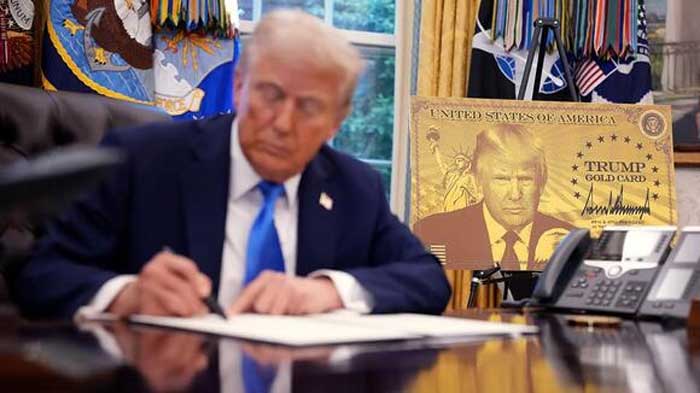
US President Donald Trump on Friday announced a $100,000 fee for companies sponsoring H-1B visas for foreign workers, alongside plans for a $1 million “gold card” residency program. The hike, effective from 21 September 2025 for 12 months, is aimed at encouraging firms to hire American talent while reducing reliance on foreign workers.
Commerce Secretary Howard Lutnick said the move targets “systemic abuse” of the H-1B program, particularly by IT outsourcing firms. Indians, who account for over 70% of H-1B visa holders, could face the biggest impact.
Impact on IT Sector and Tech Workers
The fee hike may limit job mobility and make renewals costly, experts say. Indian IT firms such as TCS, Infosys, and Wipro have already reduced dependence on H-1B visas, with US-based employees now comprising 50-80% of their workforce. Analysts warn smaller companies and early-career tech workers may struggle to secure or retain H-1B sponsorship, potentially driving talent to countries like Canada, the UK, UAE, and Saudi Arabia.
The announcement sent Infosys and Wipro ADRs down by 3.41% and 2.10%, respectively, while Accenture and Cognizant also hit session lows.
Visa Program Details
H-1B visas, largely for IT and STEM roles, are typically valid for three years and extendable to six. Trump’s administration will also revise prevailing wage levels to prevent H-1B employees from undercutting American wages.
In FY24, Indian nationals accounted for 71% of H-1B approvals, with computer-related roles making up 64% of beneficiaries. Despite the fee hike, major IT firms like TCS and Infosys have expressed confidence they can adjust, either by shifting work to India or employing other strategies.
Industry Voices
Elon Musk and Vivek Ramaswamy have defended H-1B visas as critical for US competitiveness. Musk tweeted in 2024 that “the reason I’m in America, along with so many critical people who built SpaceX, Tesla, and hundreds of other companies that make America strong, is because of H-1B.”
However, Tesla recently faced a lawsuit alleging preference for visa holders over American workers to reduce labor costs, highlighting the ongoing debate over H-1B use in the US.
Comments are closed.