
Himalayan Floods: Why Climate Change Isn’t Always the Culprit

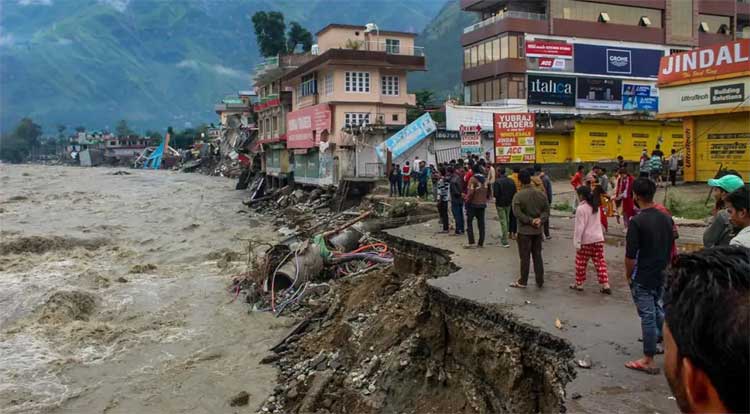
This year’s monsoon has battered the lower Himalaya, triggering deadly erosion and flash floods across Uttarakhand and Himachal Pradesh. Heavy rains arrived unusually early, in mid-May, prompting many in Mussoorie to blame “climate change.” Yet violent pre-monsoon storms have long been part of Himalayan life.
Rising global temperatures and greenhouse gases pose a grave threat to Earth’s future. But reflexively blaming every erratic weather event on climate change can obscure the more direct causes. It’s become a modern stand-in for the old phrase “acts of God.”
Last week’s flash flood in Dharali, near Harsil, devastated lives and property. Such events have struck repeatedly: Kedarnath’s 2013 floods, the Assi Ganga disaster in 2011, the catastrophic dam bursts of 1970 and 1978, and even an 1880 flood that nearly claimed the life of timber baron Frederick Wilson. The Himalaya is inherently unstable—prone to landslides, earthquakes, and violent rivers. Deforestation and human mismanagement make matters worse.
What has changed is unplanned, often illegal construction—homes, hotels, ashrams, dhabas—built directly in flood paths, often on debris-strewn riverbanks. Political opportunism and bureaucratic inaction fuel the risk. Along Uttarakhand’s Char Dham Yatra route, surging pilgrim numbers have driven a building boom. Once-remote shrines are now accessible via wide roads and helicopter services, encouraging more hotels and eateries in danger zones.
The problem isn’t limited to high valleys. In Dehradun, streambeds are being filled for housing colonies. In Mussoorie, new homes rise on unstable slopes despite past Supreme Court restrictions. None of this is caused by climate change—it’s driven by human greed and indifference.
Global warming’s true impacts—shifting weather patterns, melting glaciers—are real and profound. But blaming every disaster on it lets us ignore the immediate, avoidable factors making the Himalaya’s tragedies deadlier and more frequent.
Comments are closed.