
Bihar Sees 4.9 Million Voter Deletions in Draft Roll After Special Revision; EC Says Final Count May Vary

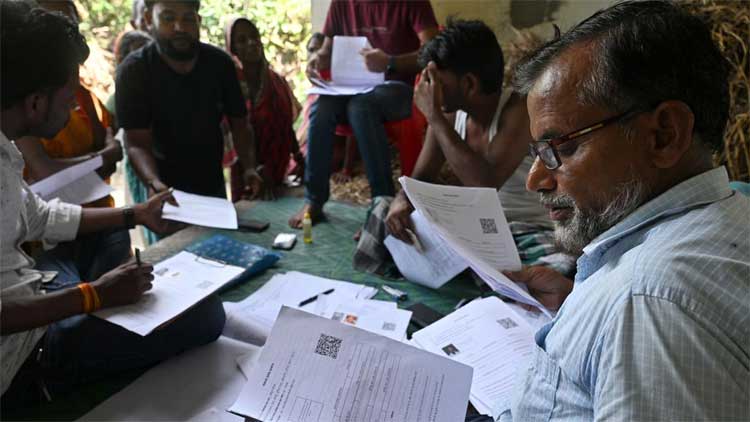
The Election Commission of India (ECI) on Friday released Bihar’s draft electoral roll following a Special Intensive Revision (SIR), reflecting 72.4 million electors—unchanged from the preliminary figure shared on July 27 but 4.9 million (6.3%) fewer than during the 2024 Lok Sabha elections, according to Hindustan Times’ analysis of ECI data.
The ECI emphasized in its press release that further additions and deletions are expected, and the final roll may change before the upcoming Assembly elections.
Disparities Across Assembly Constituencies
Bihar’s 243 Assembly Constituencies (ACs) show significant variation in the number of deletions:
-
Gopalganj recorded the highest drop, with 62,269 voters deleted (18%).
-
Dhaka (Purvi Champaran) had the lowest, with just 2,083 voters removed (0.63%).
-
District-wise, Gopalganj saw the sharpest percentage drop, while Sheikhpura recorded the lowest. In terms of absolute numbers, Patna had the highest deletions, which is expected given its large voter base.
Categorically:
-
General ACs (203) saw a 6.4% drop.
-
SC-reserved ACs (38) saw a 5.9% drop.
-
ST-reserved ACs (2) saw a 5% drop.
Why Were Voters Deleted?
According to the ECI:
-
2.2 million voters were deleted due to death.
-
3.6 million were removed for being permanently shifted or absent.
-
0.7 million were already enrolled elsewhere.
To test whether these changes are linked to migration, analysts examined the correlation between voter turnout in 2024 and deletion rates—under the hypothesis that high-migration areas would show both low turnout and high deletions. However, no strong correlation was found.
Political Impact?
Amid allegations of targeted deletions, a comparison by alliance reveals:
-
NDA-won ACs (125) in 2020 saw a 6.4% deletion rate.
-
MGB-won ACs (115) saw a 6.1% deletion rate.
Although the NDA dominates ACs with the highest deletions, there’s no clear pattern indicating partisan targeting. Analysts warn against overinterpreting these numbers since there’s no way to verify the political affiliation of deleted voters.
Were Muslim-Dominated Areas Disproportionately Affected?
It’s difficult to determine, as religion data isn’t available in electoral rolls. However:
-
Kishanganj, with the highest Muslim population in Bihar, saw the second-highest deletion rate.
-
But Katihar and Araria, also Muslim-majority districts, had some of the lowest deletion rates.
In the 19 ACs won by Muslim candidates in 2020:
-
7 fell in the top 25% for deletions,
-
4 in the bottom 25%,
-
The rest were spread across the middle.
Among 22 ACs where Muslim candidates were runners-up, deletion rates ranged from 13.6% to 0.63%, with an average of 6.3%—mirroring the statewide figure.
Close Contests and Voter Rolls
Contrary to speculation, there’s no link between narrow 2020 victory margins and higher voter deletions.
Could Turnout Actually Improve?
Paradoxically, if only non-voters (deceased, migrated, or duplicates) were removed, polling figures might actually rise despite fewer registered voters. In 2024, turnout was just 56%, the lowest in the country. For 2025 turnout to match the 2024 absolute vote count, it would need to rise to 59.8%.
Final Takeaway
While deletions have raised eyebrows, especially in light of political and demographic considerations, current data does not support strong allegations of bias. With more revisions expected, the final voter roll and its political implications remain fluid.
Comments are closed.