
UN Sounds Alarm on Deadly Impact of Sand and Dust Storms: 330 Million Affected, Health Toll Rising Sharply

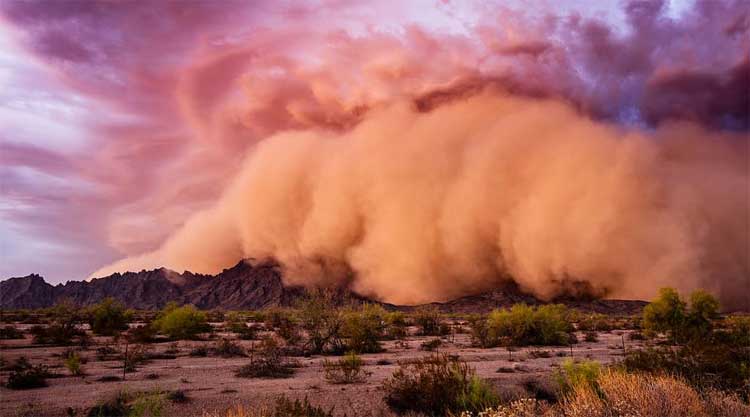
A new report by the UN’s World Meteorological Organization (WMO) has revealed that sand and dust storms — long considered a localized nuisance — are now a deadly global threat, contributing to millions of premature deaths each year due to climate change and worsening environmental degradation.
Marking the International Day of Combating Sand and Dust Storms, the UN General Assembly officially designated 2025–2034 as the UN Decade on Combating Sand and Dust Storms, highlighting the urgency of coordinated international action.
“They are fast becoming one of the most overlooked yet far-reaching global challenges of our time,” said UNGA President Philemon Yang, warning that these storms are fuelled by climate change, land degradation, and unsustainable land-use practices.
🌍 Global Scale, Severe Impact
According to the WMO:
-
330+ million people across 150 countries are affected.
-
7 million premature deaths annually are linked to airborne particles from these storms.
-
The storms aggravate respiratory and cardiovascular diseases, reduce crop yields by up to 25%, and force climate-related migration.
WMO Secretary-General Celeste Saulo emphasized the economic and social consequences:
“They’re not just about dirty windows or hazy skies — they disrupt transport, damage agriculture, hinder solar power generation, and harm human health.”
💰 Economic Fallout
The economic damage is staggering:
-
In the Middle East and North Africa, sand and dust storms cost an estimated $150 billion annually, equivalent to 2.5% of regional GDP, according to UN Undersecretary-General Rola Dashti.
-
In the U.S., wind erosion and dust cost $154 billion in 2017 alone, four times the loss in 1995, according to a Nature study.
📈 Rising Exposure and Health Risk
The joint WMO-WHO data shows a sharp increase in global exposure:
-
From 2003–2007, 2.9 billion people lived in areas with unsafe dust levels.
-
From 2018–2022, that number surged to 3.8 billion — nearly half the world’s population.
WMO’s UN representative Laura Paterson likened the scale of emissions to:
“2 billion tonnes of dust released each year — the equivalent of 300 Great Pyramids of Giza.”
Over 80% of global dust originates from deserts in North Africa and the Middle East, but its effects are transcontinental — with Saharan dust reaching the Caribbean, Florida, and even South America.
Comments are closed.