
Assertive Sovereignty: India Quietly Ends UNMOGIP Presence, Underlines Control Over Kashmir

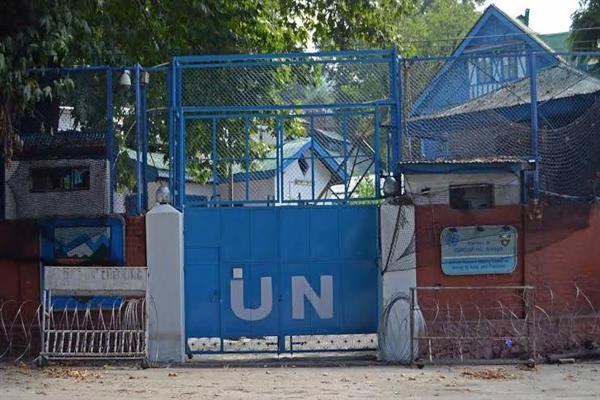
India has taken a decisive yet low-profile step to end the longstanding presence of the United Nations Military Observer Group in India and Pakistan (UNMOGIP) within its territory. Citing the 1972 Simla Agreement, which established that India and Pakistan would resolve all bilateral disputes without third-party involvement, New Delhi has effectively moved to assert full sovereignty over the Kashmir region by scaling down the UN mission’s access and activity.
Historical Context: Why UNMOGIP Existed
UNMOGIP was established in 1949 under United Nations Security Council resolutions to monitor the ceasefire line following the first Indo-Pak war. The mission’s core mandate was to supervise the ceasefire agreement and investigate alleged violations along the then-Ceasefire Line, which was later redefined as the Line of Control (LoC) after the 1971 war.
Over time, India began to regard the mission as obsolete, particularly after the Simla Agreement in 1972. This agreement between the two nations emphasized that disputes, including Kashmir, would be resolved bilaterally — leaving no role for the UN.
Why India Views UNMOGIP as Redundant
1. Superseded by Bilateral Agreements:
India asserts that the Simla Agreement nullifies UNMOGIP’s original mandate. Since the LoC was mutually agreed upon as the operational boundary, there is no longer a need for third-party supervision.
2. Limited Access and Operational Restrictions:
Since the 1970s, India has restricted UNMOGIP’s operations. Observers are only permitted to visit areas near the LoC under military supervision, and the Indian Army no longer files ceasefire complaints through UN channels.
3. Integration of Jammu and Kashmir:
After the abrogation of Article 370 in 2019 and the full integration of Jammu and Kashmir into the Indian Union, India has treated the region as an undisputed part of its sovereign territory. Officials in Srinagar have noted that the improved security situation makes UNMOGIP’s presence unnecessary.
4. Diplomatic and Administrative Moves:
India has requested the mission to vacate its offices in Srinagar and a government bungalow in New Delhi. The government considers UNMOGIP’s presence a symbolic holdover from a past era that no longer reflects the current geopolitical reality.
National Consensus on Sovereignty
There has long been a cross-party consensus on this issue. Both the ruling BJP and the principal opposition party, Congress, have consistently maintained that UNMOGIP has outlived its utility after the 1972 agreement. Successive governments have distanced themselves from the UN’s involvement in Kashmir affairs, reiterating that the region is India’s internal matter.
Srinagar’s Lieutenant Governor Manoj Sinha has echoed these views, stating that the final decision on UNMOGIP lies with the Ministry of External Affairs but indicating that the region no longer requires international monitoring.
What This Means Going Forward
India’s decision has not formally ended UNMOGIP’s mandate — only the UN Security Council can do that — but by restricting access and reclaiming UN-occupied properties, India has made its position clear. While the mission continues to operate on the Pakistan side of the LoC, its presence in India is now purely symbolic.
This development sends a firm message that India will not tolerate outdated international mechanisms interfering in what it considers its domestic jurisdiction. It underscores India’s strategic intent to resolve regional issues through bilateral channels, without external mediation.
By limiting the UNMOGIP’s role and signaling the end of its relevance, India has reinforced its control over Kashmir both administratively and diplomatically. This quiet yet firm move marks a pivotal moment in the assertion of India’s sovereignty. It also reflects a shift in New Delhi’s foreign policy doctrine — one that prioritizes national interests and rejects external oversight in core matters of security and territorial integrity.
Comments are closed.