India and Norway Strengthen Blue Economy and Ocean Governance Ties at UNOC3 Dialogue

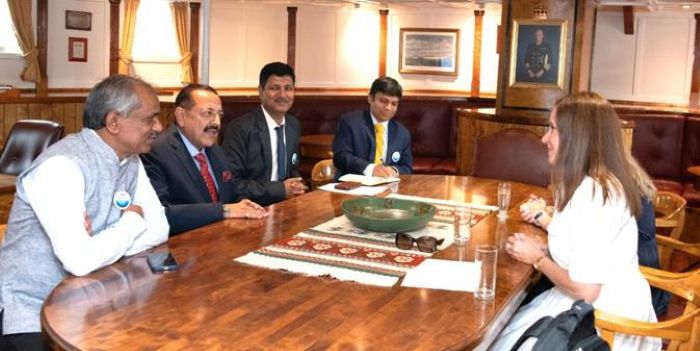
As global leaders gear up for the UN Ocean Conference (UNOC3), India and Norway have taken notable steps to bolster their partnership in ocean governance and the blue economy, showcasing deepening ties in maritime sustainability and marine resource management.
India–Norway Ocean Dialogue & MoU
The Indian Cabinet recently approved a Memorandum of Understanding (MoU) between India and Norway to establish the India–Norway Ocean Dialogue, aimed at strengthening cooperation in maritime affairs. This includes areas like fisheries, offshore energy, maritime transport, and tourism, along with cross-border scientific collaboration—from India’s Exclusive Economic Zone (EEZ) to Arctic research.
Task Force & Joint Initiatives
Established in 2019, the Indo–Norwegian Blue Economy Task Force serves as the keystone of this collaboration, bringing together government departments, researchers, and private enterprises from both nations. Over 2022–2024, the Task Force has overseen:
-
Launch of the India–Norway Integrated Ocean Management & Research Initiative for coordinated planning, scientific research, and marine spatial planning.
-
Signing of MoUs between NTNU and India’s DG Shipping, and between Greenstat and Indian Oil Corporation, focusing on maritime knowledge and hydrogen centres of excellence.
-
Expansion of collaboration into green shipping technologies, marine pollution mitigation, deep-sea exploration, fisheries, and aquaculture.
Connecting with UNOC3 Priorities
Building on their existing framework, India and Norway are expected to bring several key priorities to UNOC3:
1. Sustainable Ocean Management
-
Enhancing marine spatial planning models and conflict-resolution mechanisms.
-
Leading by example in tackling plastic pollution and waste management through bilateral and pilot projects.
2. Green Maritime Technologies
-
Driving innovations in zero-emission shipping, including hydrogen and ammonia fuels.
-
Launching industry collaborations to develop deep-ocean technologies, with Norway supplying tech and India contributing scale.
3. Fisheries, Aquaculture & Food Security
-
Joint efforts to apply Norwegian technologies in fisheries and aquaculture to boost Indian food security objectives.
4. Ocean-based Renewable Energy
-
Collaborative exploration of offshore renewable energy, including offshore wind and hydrogen-powered solutions, demonstrated through new business agreements .
Strategic & Economic Impact
This strategic partnership aligns closely with India’s Deep Ocean Mission—focused on seabed mapping, resource exploration, and ecosystem studies—and Norway’s global leadership in maritime technologies . It reinforces India’s aspirations under the Vision for New India by 2030 and supports global goals like the UN Sustainable Development Goal 14 on life below water .
Looking Ahead to UNOC3
At UNOC3, both nations are expected to present their coordinated action plans, emphasizing blue economy growth aligned with conservation and emissions reduction. Their joint initiatives may serve as blueprints for other coastal nations striving for sustainable maritime development, creating momentum for global cooperation on ocean governance.
Comments are closed.