

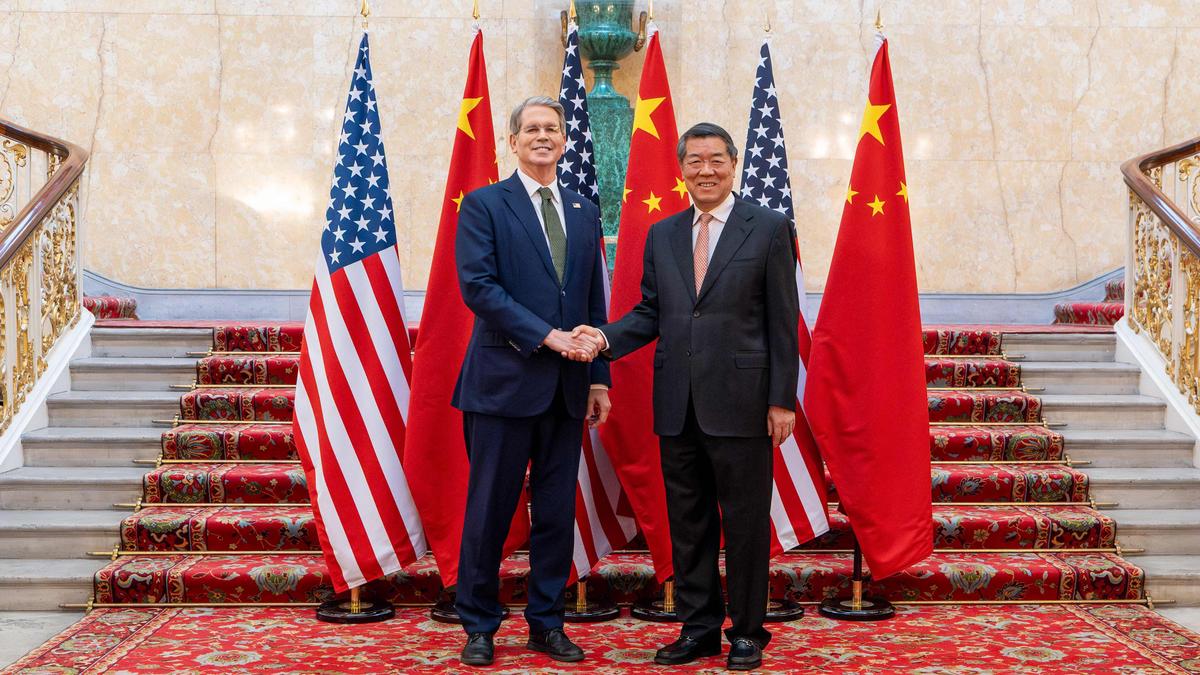
Trade negotiators from the United States and China have resumed high-level discussions in London this week, following a crucial phone call between former U.S. President Donald Trump and Chinese President Xi Jinping. The renewed dialogue comes amid escalating tensions over tariffs, technology exports, and critical minerals.
The talks, taking place at Lancaster House in central London, mark the first in-person negotiations between the two countries since a temporary 90-day trade truce was agreed upon in Geneva last month. This truce paused further tariff hikes but left many contentious issues unresolved.
Background: Trump–Xi Phone Call Sets the Stage
The resumption of talks was catalyzed by a 90-minute phone conversation between Trump and Xi on June 5. According to sources close to both leaders, the call was described as “constructive” and helped pave the way for the current meeting in London. Trump emphasized the importance of restoring economic balance, while Xi reiterated China’s commitment to mutually beneficial trade.
The conversation reportedly focused on reducing trade barriers, re-opening rare earth supply lines, and addressing visa restrictions impacting students and tech workers.
Key Participants and Agenda
U.S. Delegation:
-
Scott Bessent – U.S. Treasury Secretary
-
Howard Lutnick – U.S. Commerce Secretary
-
Jamieson Greer – U.S. Trade Representative
Chinese Delegation:
-
He Lifeng – Vice Premier of China
-
Wang Wentao – Chinese Minister of Commerce
The negotiations are being hosted by the United Kingdom, with UK Chancellor Rachel Reeves and Business Secretary Jonathan Reynolds facilitating the diplomatic environment, though the UK is not a direct participant.
Core Issues Under Discussion
-
Rare Earth Mineral Exports:
China’s recent export restrictions on rare earth elements have raised alarms in the U.S., especially among tech and defense sectors that rely heavily on these materials. U.S. negotiators are pressing China to ease these controls and commit to a predictable supply regime. -
Advanced Semiconductor Controls:
The U.S. has tightened export restrictions on cutting-edge semiconductors and manufacturing tools, citing national security. China is calling for a relaxation of these curbs, arguing they unfairly hinder its technological development. -
Tariff Reductions and Trade Balance:
Both countries are evaluating ways to reduce tariffs that have crippled bilateral trade since 2018. China seeks to stabilize its export markets, while the U.S. wants a more level playing field for its goods and services. -
Student Visas and Human Exchange:
Recent U.S. policies that revoked thousands of student visas from China have become a flashpoint. Chinese officials are expected to push for a review of these restrictions, citing damage to educational and scientific cooperation.
Market Reactions and Global Impact
Global markets responded cautiously to the announcement of renewed talks. The U.S. dollar remained stable, while Asian and European stock indices rose modestly on optimism that a major trade conflict may be headed toward resolution. Commodity prices, especially those tied to rare earths, fluctuated as investors weighed the possible outcomes of the negotiations.
Economic analysts believe the success of these talks could have a far-reaching impact on global supply chains, particularly in high-tech industries like electric vehicles, AI chips, and telecommunications.
Comments are closed.