
2025 Marks Fourth Straight Year Of Net Global Glacier Mass Loss

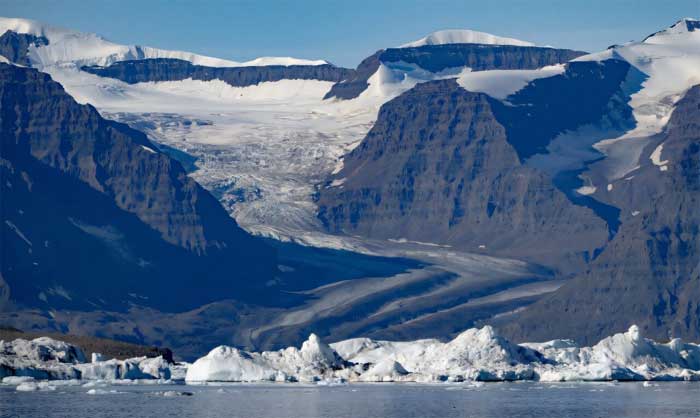
Glaciers recorded a net loss of ice mass for the fourth consecutive year in 2025, with several major glaciated regions experiencing some of their most severe losses on record, according to the World Meteorological Organisation’s (WMO) latest State of Global Water Resources 2025 report.
Between October 2024 and September 2025, glaciers worldwide lost an estimated 408 ± 132 gigatonnes of ice mass, contributing 1.1 ± 0.4 mm to global sea-level rise.
The report said six of the seven largest annual glacier mass losses on record have occurred within the past seven years, highlighting the accelerating pace of ice loss.
Major Glaciated Regions Record Severe Losses
The WMO report said the Central Asia, South Asia West, Russian Arctic, Iceland, and Western Canada and USA regions each recorded annual mass balances that ranked among their three most negative years on record in 2025.
“Overall, the substantial loss of glacier mass throughout the twenty-first century represents a decline in global freshwater resources,” the report said.
Mountain glaciers lost around 6.2% of their ice mass between 2000 and 2025, while some regions have experienced much larger declines over several decades.
For example, glaciers in Russia’s central Altai region have lost 271.7 square kilometres, or 40.2% of their area, since the 1950s. Of that loss, 93.8 square kilometres, or 18.8%, occurred since 2001. The strongest losses were recorded in the South Chuya range.
Glacier Ice Loss Accelerating Since 1990s
The report noted that glacier mass loss has increased across almost all regions since the 1990s and accelerated considerably after 2000.
“This is mostly due to regions consistently presenting larger summer melt than winter accumulation after the 1990s,” the report said.
The trend means that glaciers are losing more ice during summer than they are able to replenish through winter snowfall.
Some Regions May Have Reached ‘Peak Water’
The report also highlighted an important change in the relationship between glacier melt and water availability.
Regions with predominantly smaller glaciers, including the Caucasus, western Canada and the United States, and central Europe, recorded little or no increase — and in some cases a decline — in minimum summer runoff, despite experiencing greater annual glacier mass losses than the 1991–2020 average.
According to the report, this could indicate that these regions have already reached “peak water” — the point at which glacier melt produces the maximum amount of runoff before declining as the glaciers continue to shrink.
The finding raises concerns about future freshwater availability in mountain regions that depend on glacier-fed rivers, as continued ice loss can eventually reduce the amount of water available during the summer months.
Comments are closed, but trackbacks and pingbacks are open.