
World Needs WMO More Than Ever as UN Weather Agency Marks 75 Years

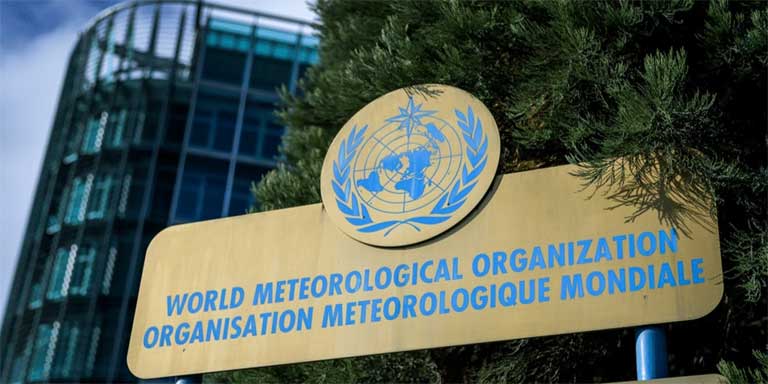
As the World Meteorological Organization (WMO) marks its 75th anniversary, global leaders and climate experts have delivered a clear message: at a time of accelerating climate risks, the world’s dependence on the UN weather body has never been greater.
A year-long series of anniversary events highlighted WMO’s crucial role in saving lives, strengthening economies, and translating scientific knowledge into real-world action. The celebrations began on World Meteorological Day on March 23 and culminated in October at the Extraordinary World Meteorological Congress, where member states reaffirmed their commitment to strengthening global weather and climate services.
At the Congress, WMO Secretary-General Celeste Saulo issued a strong Call to Action to fast-track universal coverage of early warning systems—an initiative aimed at ensuring every person on Earth is protected from hazardous weather and climate events. The meeting also featured a special address by UN Secretary-General António Guterres, who voiced firm support for the “Early Warnings for All” initiative.
“WMO is becoming more important than ever,” Guterres told delegates, describing the organization as “a barometer of truth” and a trusted source of scientific data about the planet. Warning that the world is nearing an inevitable overshoot of the Paris Agreement’s 1.5°C temperature limit, he stressed that early warning systems will be critical in reducing loss of life as climate extremes intensify.
Climate urgency and record heat
Concerns over temporarily breaching the 1.5°C threshold dominated global climate discussions in 2025, including at COP30 in Belém, Brazil. Opening the summit, Saulo presented the State of the Climate Update for 2025, confirming that the year is once again on track to rank among the warmest ever recorded. This would mark the 11th consecutive year to feature among the world’s hottest on record.
Extreme weather events throughout the year—ranging from deadly floods and heatwaves to destructive storms—caused significant loss of life and billions of dollars in economic damage. These events underscored the urgency of scaling up early warning systems, particularly in vulnerable regions with limited forecasting and response capacity.
AI and data sharing take centre stage
Artificial intelligence emerged as a major enabler in strengthening weather forecasting and warning dissemination. Recognising its transformative potential, the World Meteorological Congress adopted a landmark resolution to guide WMO’s work on AI in the coming decades, with a focus on accuracy, accessibility and ethical use.
Reflecting on WMO’s evolution since its founding in 1950, Saulo highlighted how the organization began without satellites or supercomputers, relying instead on international cooperation. She said the principle of free and open exchange of meteorological data remains one of WMO’s greatest achievements, rooted in the understanding that no country can face weather, water and climate challenges alone.
“WMO remains the backbone of a global ecosystem that saves lives and money every single day,” Saulo said at a special anniversary event in Geneva, citing benefits ranging from safer aviation routes to improved flood protection, drought preparedness and climate monitoring. She described WMO as a model of “data diplomacy” built on science, trust and shared evidence.
Engaging youth, facing funding gaps
The anniversary year also focused on WMO’s future. During the Extraordinary Congress, the organization adopted its first-ever Youth Action Plan, aimed at empowering young meteorologists, hydrologists and climate scientists. Developed through a year-long global consultation involving more than 200 participants, the plan seeks to integrate youth voices into WMO’s work and promote intergenerational responsibility in climate action.
However, Saulo also warned of a persistent challenge facing WMO and other multilateral institutions: chronic underinvestment. Despite the central role of weather, climate and water services in development, security and humanitarian efforts, funding continues to lag behind actual needs.
Looking ahead to its next 75 years, Saulo outlined three guiding principles for WMO’s future—science and trust as the basis for collective action, protection of global public goods, and the joint advancement of adaptation, innovation and equity.
“As we look forward,” she said, “the partnerships that guide us today will only deepen.”
Comments are closed.