
World Leaders Push Back Against Trump’s Bullying Tactics Ahead of G7 Summit

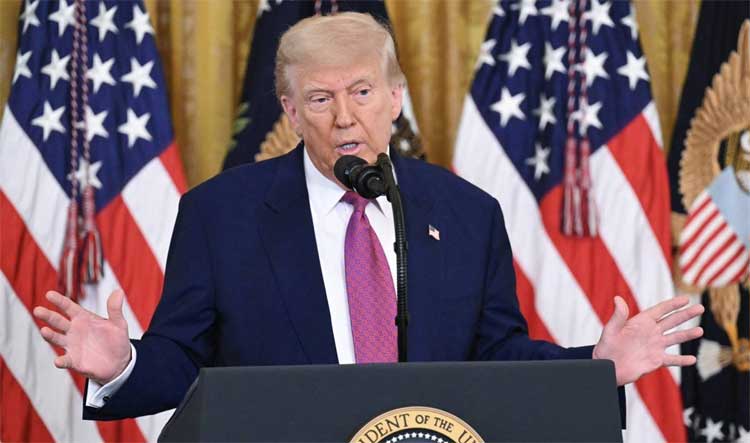
As the Group of Seven (G7) summit opens in Canada this week, U.S. President Donald Trump faces an increasingly assertive bloc of world leaders less willing to bow to his pressure tactics.
Since taking office, Trump has wagered that intimidation—whether through tariffs, military threats, or personal confrontation—would force allies into submission. He has floated taking over territories like Greenland and even questioned the U.S. commitment to NATO’s mutual defense. But many global leaders now appear more prepared to call his bluff.
“Many leaders still seem intimidated by Trump, but increasingly they are catching on to his pattern of bullying,” said Jeremy Shapiro, research director at the European Council on Foreign Relations. “In places as diverse as Canada, Iran, China, and the EU, we’re seeing signs that they understand Trump avoids fair fights—and they’re beginning to stand up to him.”
Shapiro’s analysis notes that despite Trump’s 22 public threats of military action during his first term, the U.S. acted only twice.
Subtle Resistance Emerges Ahead of the Summit
As leaders gather in the mountain resort of Kananaskis, early signs suggest the group is quietly distancing itself from Trump. French President Emmanuel Macron signaled European unity with a symbolic visit to Greenland. Canadian Prime Minister Mark Carney declared that the U.S. is no longer the world’s “predominant” power, blaming Trump’s tariffs for damaging North America’s decades-long alliance.
“Today, that predominance is a thing of the past,” Carney said in French, adding that the U.S. under Trump has started monetizing its global leadership by charging for market access and pulling back from collective security responsibilities.
A senior Canadian official confirmed the G7 won’t issue a joint communiqué—a tradition abandoned due to Trump’s unpredictability—opting instead for individual leader statements.
Global Flashpoints Deepen Tensions
The summit’s backdrop is complicated by Israel’s recent military strike on Iran, escalating geopolitical volatility. European leaders have voiced concern that Trump’s zero-sum approach undermines long-standing global cooperation.
Speaking in Singapore last month, Macron reaffirmed France’s alliance with the U.S. but pushed back against Trump’s pressure tactics: “We want to cooperate, but we do not want to be instructed daily on what is allowed or how we must live.”
Japanese Prime Minister Shigeru Ishiba also criticized Trump’s protectionist trade agenda, warning that tariffs on imports would stifle growth. He reportedly called Trump ahead of the summit, both to secure a sideline meeting and to wish him a happy birthday.
A Chance to Reset—But Doubts Remain
Senator Jeanne Shaheen (D-N.H.), ranking member of the Senate Foreign Relations Committee, said the summit offers Trump an opportunity to repair strained relationships, which could otherwise allow China to exploit divisions among Western powers.
“The foreign leaders I’ve spoken to still value their partnerships with the U.S., but they know they have other options,” she said.
Some Courting Trump—Others Preparing to Sidestep Him
While Trump has alienated many, he continues to receive warmer treatment from leaders like UK Prime Minister Keir Starmer, German Chancellor Friedrich Merz, and Italian Prime Minister Giorgia Meloni. Each has tried to balance cooperation with strategic distance.
Starmer, aligning with Trump on NATO defense spending, also delivered an invitation from King Charles III during his Oval Office visit—an overture that reportedly pleased the U.S. president.
Germany emphasized unity after Merz’s recent visit to Washington, though officials are watching closely to see if private goodwill translates into real cooperation at the summit.
Italy’s Meloni, who attended Trump’s 2025 inauguration and styles herself as a transatlantic bridge, finds herself in a delicate position: balancing support for Ukraine with Trump’s threats of tariffs on EU goods.
Mark Sobel, U.S. chair of the Official Monetary and Financial Institutions Forum, said Trump’s trade stance, flirtation with European right-wing movements, and fondness for authoritarian leaders are driving a wedge between the U.S. and its G7 allies.
“Behind the curtains, and despite whatever theater unfolds, the Kananaskis summit will underscore a fragmented G7 and an adrift global economy,” Sobel said.
Comments are closed.