
With Fragile Gaza Ceasefire in Place, Trump Now Looking to ‘Get Russia Done’

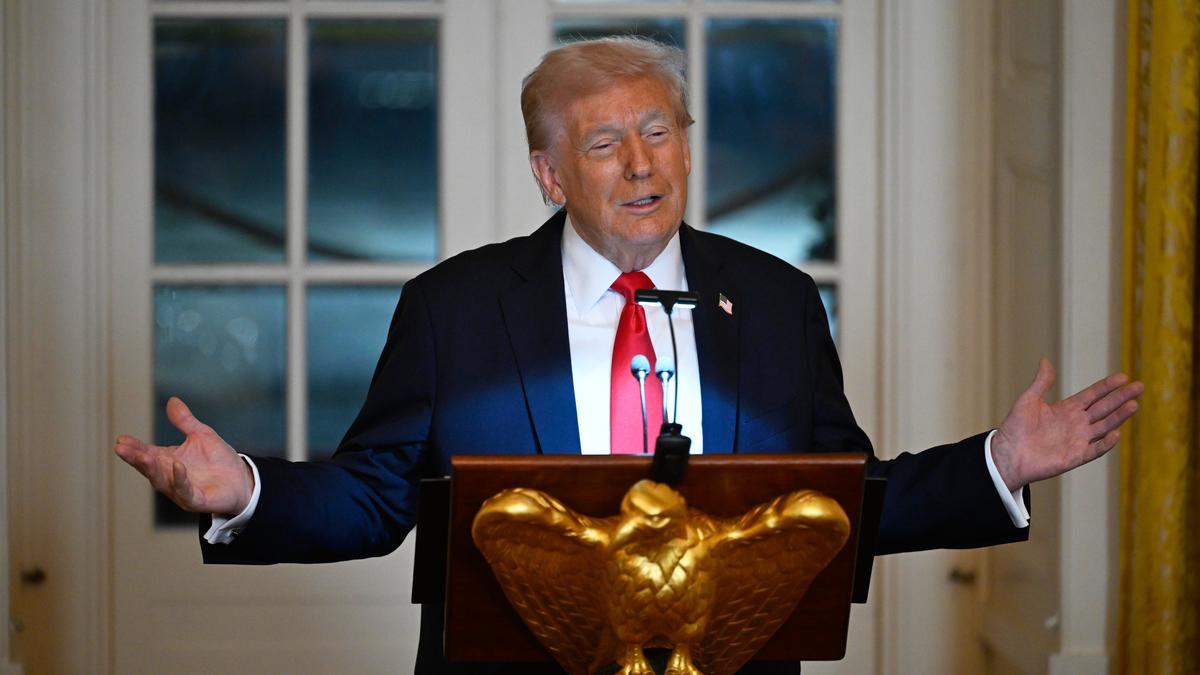
As tensions in the Middle East temporarily ease under a fragile Gaza ceasefire, former U.S. President Donald Trump appears to be turning his focus toward another pressing global challenge — Russia. In recent remarks, Trump suggested that with the immediate crisis in Gaza momentarily stabilized, he now intends to “get Russia done,” hinting at a possible renewed push for diplomacy or a tougher stance in dealing with Moscow’s ongoing geopolitical maneuvers.
The comment, though brief, reflects Trump’s characteristic mix of ambition and unpredictability on the world stage — especially at a time when international relations are walking a tightrope between conflict and negotiation.
A Fragile Calm in Gaza
The current ceasefire in Gaza, brokered after weeks of violent escalation, remains tenuous. While both sides have paused direct hostilities, underlying tensions and humanitarian concerns continue to simmer. The truce has been described by observers as “fragile but necessary,” offering a slim window for aid delivery and reconstruction in the war-torn region.
For Washington, the ceasefire represents a temporary diplomatic win, albeit one that requires constant engagement and monitoring. Trump’s assertion that Gaza is “under control for now” signals his intent to pivot U.S. attention toward broader global issues — primarily the strained ties with Russia.
Trump’s Renewed Focus on Russia
The phrase “get Russia done” has drawn considerable attention, partly because of its ambiguity. It could refer to a desire to conclude ongoing diplomatic talks, to reassert American leverage over Moscow, or even to forge a new kind of deal altogether.
During his previous tenure, Trump’s relationship with Russia was a point of intense scrutiny and controversy. His critics accused him of being soft on Moscow, while his supporters argued that he aimed to recalibrate ties for the sake of strategic balance. Now, his renewed focus on Russia suggests a belief that American diplomacy must regain control over an increasingly multipolar world — one where Russia’s actions in Eastern Europe and Central Asia continue to challenge Western interests.
Global Stakes and Power Politics
The timing of Trump’s statement is notable. As Europe continues to grapple with the consequences of the Ukraine conflict and NATO struggles to maintain unity, any U.S. policy shift toward Russia could have far-reaching effects. Analysts believe Trump’s rhetoric could either signal a push for peace negotiations or a hardline strategy to restore American dominance.
Meanwhile, with China expanding its influence and the Middle East’s stability hanging by a thread, Washington’s next steps will shape the geopolitical order for years to come. Trump’s pivot suggests a belief that resolving or redefining the U.S.-Russia relationship is key to regaining control over global diplomacy.
Balancing Diplomacy and Domestic Politics
On the home front, Trump’s remarks also serve a political purpose. As the U.S. approaches another election cycle, his foreign policy posturing seeks to project strength and decisiveness — traits that defined his earlier presidency. By positioning himself as the leader capable of “handling Russia” after managing Gaza’s ceasefire moment, Trump is reinforcing his image as a global dealmaker capable of navigating high-stakes crises.
However, critics argue that such rhetoric oversimplifies complex international realities. The Gaza ceasefire remains vulnerable, and Russia’s strategic ambitions are far from contained. Turning attention too quickly, they warn, could jeopardize the fragile balance achieved through hard-won diplomacy.
A New Phase in Trump’s Global Playbook
Whether Trump’s statement marks the start of a serious diplomatic initiative or a symbolic gesture remains to be seen. What is clear is that he’s attempting to reassert an active, deal-oriented American foreign policy — one that places him, once again, at the center of global headlines.
With Gaza’s calm hanging by a thread and Europe still navigating the aftermath of war, Trump’s declaration to “get Russia done” underscores the complexity of modern leadership — where every move on the global chessboard can tilt the balance between peace and power.
As the world watches, one thing is certain: Trump’s return to the foreign policy stage promises anything but quiet diplomacy.
Comments are closed.