
Wind, Temperature Rescue Delhi After Pollution Soars to 100 Times the Prescribed Limit

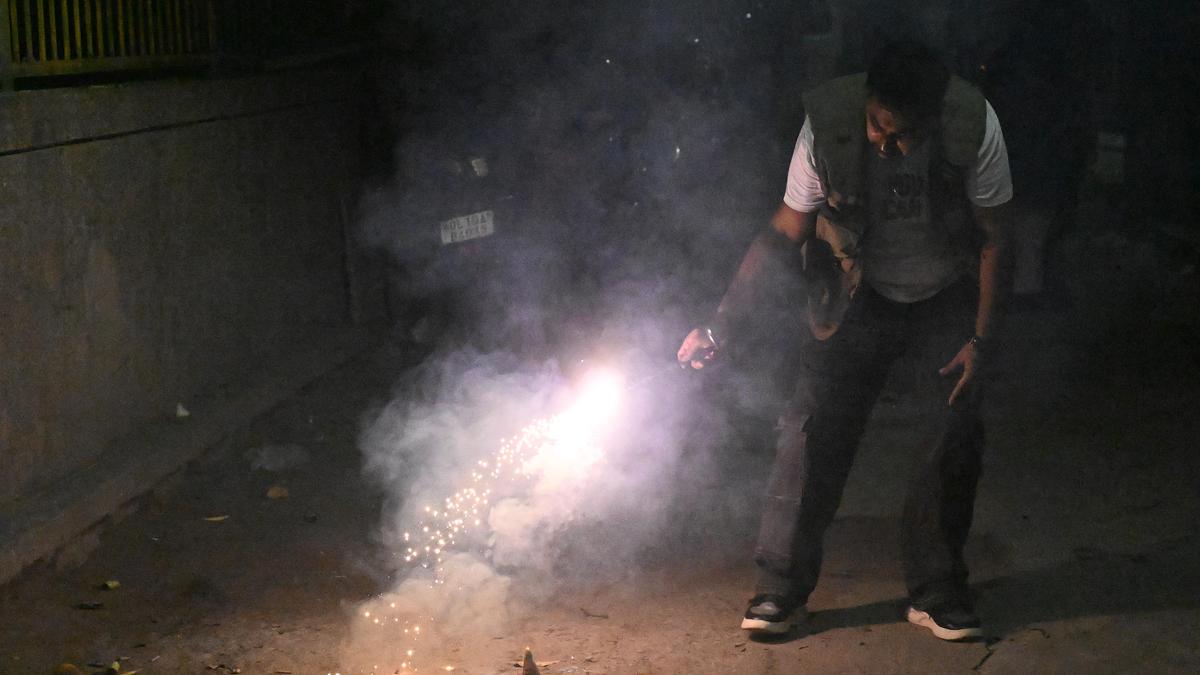
In a dramatic turn of events, Delhi’s choking air — which had reached levels nearly 100 times higher than the World Health Organization’s prescribed safety limit — finally saw relief as strong winds and a rise in temperature helped disperse the toxic smog that had blanketed the city for days. The sudden improvement came as a natural intervention in what had become one of the worst pollution episodes of the season, offering temporary respite to millions struggling to breathe in the world’s most polluted capital.
A Crisis at Its Peak
Earlier this week, air quality monitors across Delhi recorded PM2.5 concentrations exceeding 800 µg/m³ in several neighborhoods — an alarming figure when compared to the WHO’s safe limit of 15 µg/m³. Schools were closed, construction halted, and hospitals reported a sharp increase in patients suffering from respiratory distress, asthma attacks, and eye irritation. The city had turned into what many residents described as a “gas chamber,” with visibility dropping to mere meters in some areas.
The Air Quality Index (AQI) hovered between the “severe” and “hazardous” categories for several consecutive days, prompting authorities to impose emergency measures such as restrictions on vehicle movement, bans on open burning, and partial shutdowns of industrial activities. Yet, despite these efforts, the dense smog persisted — until nature intervened.
Nature’s Clean-Up Crew: Wind and Warmth
On Tuesday night, a shift in wind patterns brought much-needed relief. Gusts blowing from the northwest swept through the National Capital Region, dispersing the trapped pollutants that had accumulated over the stagnant air mass. Simultaneously, a rise in temperature during the day helped break the thermal inversion — a weather phenomenon that had been trapping pollutants close to the ground.
Meteorologists explained that the higher temperature encouraged vertical air movement, allowing pollutants to mix with the upper atmosphere instead of lingering near the surface. The combination of ventilation and dispersion significantly reduced pollution concentrations within hours, and by Wednesday morning, Delhi’s skyline was visible again after days of haze.
Temporary Relief, Long-Term Challenge
While the improvement in air quality offered immediate comfort, experts cautioned that this was only a temporary reprieve, not a solution. The underlying sources of pollution — vehicular emissions, crop residue burning in neighboring states, industrial discharge, and construction dust — remain unaddressed.
Environmental analysts noted that each winter, Delhi’s air quality deteriorates sharply due to stagnant winds and large-scale stubble burning in Punjab and Haryana. The city’s geography, dense population, and rapid urbanization exacerbate the crisis, making it dependent on weather shifts rather than sustained policy enforcement for relief.
“The wind saved Delhi this time, not our policies,” one environmental expert observed. “We cannot continue relying on nature to clean up our mess. Structural and behavioral changes are needed.”
Government Response and Public Reaction
The Delhi government welcomed the improvement in air quality but reiterated its commitment to ongoing pollution-control measures. Officials stated that restrictions under the Graded Response Action Plan (GRAP) would remain in place until air quality stabilized. Efforts to reduce dust from construction sites, curb vehicular emissions, and enforce waste management laws are expected to continue in the coming weeks.
Residents, meanwhile, expressed mixed emotions — relief over cleaner air, but frustration at the recurring pattern. “Every year, it’s the same story,” said a shopkeeper in Connaught Place. “We choke for a week, and then wait for the wind to come to our rescue. Why can’t this be fixed permanently?”
Health and Environmental Implications
Medical experts warn that even short-term exposure to such high pollution levels can have lasting health effects, especially for children, the elderly, and those with pre-existing respiratory or cardiac conditions. Long-term exposure is linked to chronic bronchitis, reduced lung capacity, and cardiovascular diseases.
The brief clean-up by wind does not erase the damage already done. Air quality scientists stress that frequent spikes in PM2.5 and PM10 levels can shorten life expectancy and undermine years of public health progress.
The Road Ahead: From Reaction to Prevention
Delhi’s pollution crisis has become an annual reminder of the urgent need for systemic solutions. Experts advocate for:
-
Cleaner transportation policies, including electric vehicles and stricter emission norms.
-
Crop management alternatives to discourage stubble burning.
-
Urban green zones to improve air filtration naturally.
-
Public awareness campaigns to promote behavioral changes among citizens.
Without sustained intervention, they warn, Delhi will continue to oscillate between hazardous smog and short-lived relief provided by changing weather patterns.
Conclusion
The winds and warmer temperatures may have rescued Delhi from the brink of an environmental emergency, but they also served as a sobering reminder of the city’s fragile dependence on nature for clean air. As the haze lifted and blue skies returned, so too did the urgent call for long-term action — to ensure that fresh air is not a seasonal gift, but a fundamental right.
Until then, every gust of wind will remain both a breath of relief and a reminder of inaction.
Comments are closed.