
Why Trump’s Push for Greenland Is Closely Linked to Climate Change

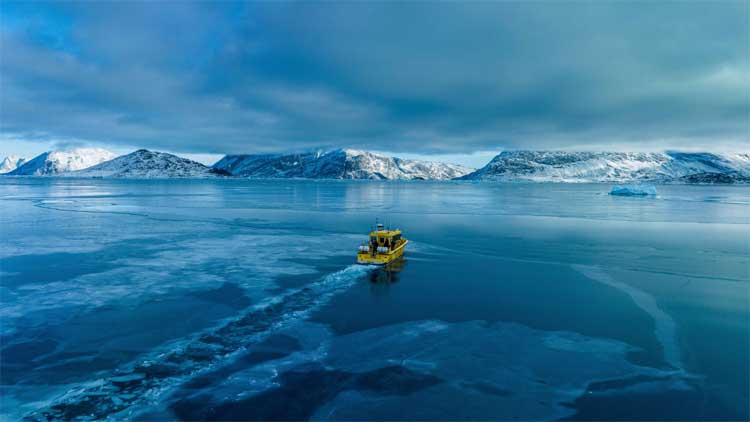
Donald Trump’s renewed push to bring Greenland under US control is not just a geopolitical gambit. It is deeply intertwined with climate change and the rapid transformation of the Arctic, which is reshaping the region’s strategic, economic and environmental importance.
Greenland in a warming world
Greenland, an autonomous Danish territory with a population of about 60,000, sits between the Atlantic and Arctic oceans. It is home to the world’s second-largest ice sheet, which contains enough frozen water to raise global sea levels by more than seven metres if it were to melt entirely. Even partial melting is already contributing significantly to sea-level rise, threatening coastal communities worldwide.
The Arctic is warming more than twice as fast as the global average, and Greenland is losing ice at an alarming pace. Glaciers are retreating, ice sheets are thinning and landscapes once locked under ice are becoming exposed.
New routes, new resources
As ice melts, Greenland is no longer just a remote, frozen landmass. Shrinking ice cover is opening new Arctic shipping routes that could significantly shorten travel times between Asia, Europe and North America. At the same time, retreating ice is revealing access to vast natural resources, including rare earth elements, uranium, iron and gold.
These materials are critical for modern technologies such as electric vehicles, batteries and wind turbines. As access becomes easier, Greenland’s economic and political value has risen sharply, drawing intense interest from global powers.
Redrawing the Arctic power map
The warming Arctic is fast becoming a geopolitical hotspot. The US, China and Russia are all seeking to expand their influence as competition grows over newly accessible land, minerals and sea lanes. Trump has framed Greenland as vital to US national security, but climate change is a key driver of why the island now matters so much.
As ice retreats, strategic military positioning, control of trade routes and access to resources are likely to become even more contested.
A fragile climate stabiliser at risk
Beyond geopolitics, Greenland plays a critical role in regulating Earth’s climate. Its vast ice sheets reflect sunlight back into space, helping to cool the planet. As these ice sheets melt, darker land and ocean surfaces absorb more heat, accelerating warming in a dangerous feedback loop.
Any push to exploit Greenland’s resources risks further environmental damage. Increased mining, drilling and shipping could harm fragile Arctic ecosystems that are already under stress. There is also the risk of adding new fossil fuel emissions at a time when the world is struggling to curb global warming.
Why Greenland matters to everyone
Trump’s renewed focus on Greenland highlights a growing tension in a climate-changed Arctic: as the region becomes more accessible, it also becomes more vulnerable. Decisions taken about Greenland’s future will not only shape regional politics but will also influence global sea levels, climate stability and international relations for decades.
What happens in Greenland will not stay in Greenland.
Comments are closed.