
WHO Seeks $1 Billion to Tackle World’s Worst Health Crises in 2026

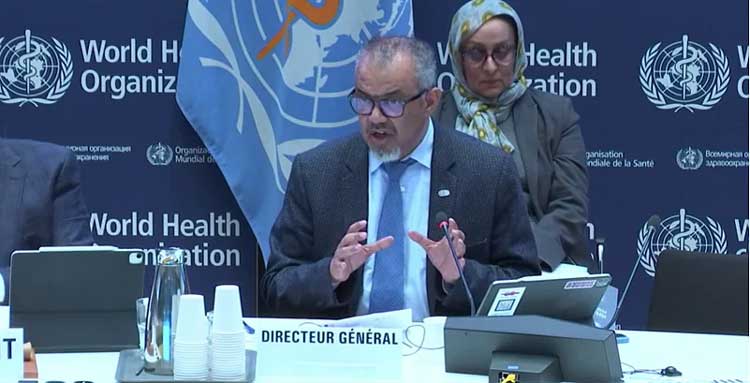
The World Health Organization (WHO) on Tuesday appealed for $1 billion to address health crises across 36 of the world’s most severe emergencies this year, including in Gaza, Sudan, Haiti and the Democratic Republic of Congo.
The UN health agency estimates that around 239 million people will require urgent humanitarian assistance in 2026, with the funding aimed at maintaining essential health services in crisis-hit regions.
Speaking to reporters in Geneva, WHO’s health emergencies chief Chikwe Ihekweazu said nearly a quarter of a billion people are living in humanitarian settings where basic protections such as safety, shelter and access to healthcare have been stripped away.
“In these settings, health needs are surging due to injuries, disease outbreaks, malnutrition and untreated chronic illnesses,” he said. “Yet access to care is shrinking.”
The funding appeal is significantly lower than in previous years, reflecting a global crunch in humanitarian aid. The United States, traditionally the WHO’s largest donor, has sharply reduced foreign aid spending under President Donald Trump, who in January 2025 issued a one-year notice to withdraw from the agency.
Last year, the WHO sought $1.5 billion in emergency funding but received only $900 million. Ihekweazu said the agency has adjusted its latest request to reflect declining donor support.
“We recognise that the appetite for resource mobilisation is much smaller than in previous years,” he said. “That is why we have calibrated our appeal toward what is realistically available.”
The WHO said it is “hyper-prioritising” high-impact services in 2026 while scaling back lower-impact activities to maximise lives saved.
Funding shortfalls last year forced 6,700 health facilities across 22 humanitarian settings to close or reduce services, cutting off healthcare access for an estimated 53 million people, Ihekweazu said.
“Families living on the edge face impossible choices, such as whether to buy food or medicine,” he added. “People should never have to make these choices.”
He urged governments and donors to invest in global health security, saying, “This is why we are appealing to the better sense of countries and people to help build a healthier, safer world.”
Comments are closed.