
‘When we sit on bench, we lose our religion’: CJI to Centre during Waqf Act hearing

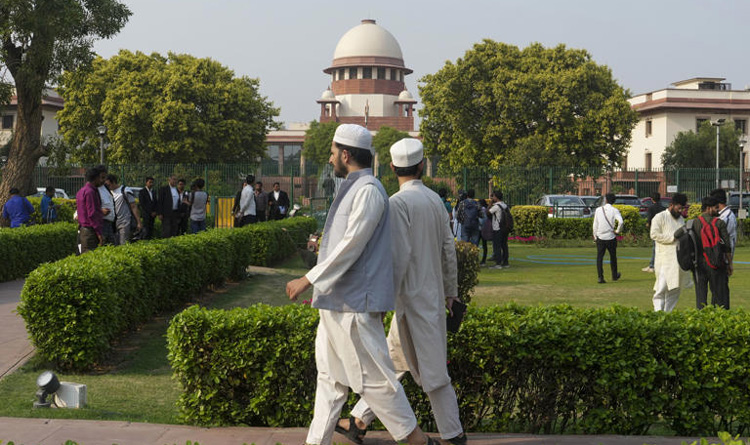
The Supreme Court took strong note of an analogy drawn by the Narendra Modi government in support of the inclusion of non-Muslims in Waqf boards, and the argument that by that logic, a bench of Hindu judges should not be hearing pleas related to the Waqf.
According to a PTI report, the top court bench comprising Chief Justice of India (CJI) Sanjiv Khanna and Justices Sanjay Kumar and K V Viswanathan was questioning the provisions of the Waqf (Amendment) Act, 2025 that allow for the nomination of non-Muslim members to the Central Waqf Council and state waqf boards.
“Are you suggesting that minorities, including Muslims, should also be included in boards managing Hindu religious institutions? Please state that openly,” PTI quoted the CJI as saying.
Solicitor General (SG) Tushar Mehta. while appearing for the Centre, defended the provisions, emphasising that the inclusion of non-Muslim members is limited and does not affect the predominantly Muslim composition of these bodies.
Mehta also argued that objections to non-Muslim participation could logically extend to judicial impartiality and by that logic, the bench itself would be disqualified from hearing the matter, the PTI report added.
“If the objection to the presence of non-Muslims in the statutory boards is accepted, then the present bench would also not be able to hear the matter. Then your Lordships cannot hear this matter if we go by that logic,” Mehta told the bench.
The CJI shot back, saying, “No, sorry Mr Mehta, we are not talking just about adjudication. When we sit here, we lose our religion. We are absolutely secular. For us, one side or the other is the same.”
Supreme Court proposes to stay key provisions of Waqf Act
The Supreme Court proposed to stay certain key provisions of the contentious Waqf (Amendment) Act, 2025, including the power to denotify properties declared as waqf by courts and inclusion of non-Muslims in central Waqf councils and boards.
The top court proposed to pass the order, which was opposed by the Centre as it sought a detailed hearing before any such interim order.
Comments are closed.